

Clearly Iconic Transparent Patches for Apparel Logos
Table of Contents
- A Closer Look at the Patch Architecture
- Where Transparent Patches Outperform on Apparel Logos
- Real Performance Gains on the Finished Garment
- Comparative Advantage Across Branding Methods
- Testing Transparency and Toughness Under Controlled Protocols
- Seamless Integration into High-Speed Production
- Driving Brand Perception Through Material Innovation
- The Measurement of Success in Real Categories
Transparent patches have arrived as the go-to branding tool for modern apparel logos, merging high-definition graphics with barely-there physical presence.
A Closer Look at the Patch Architecture
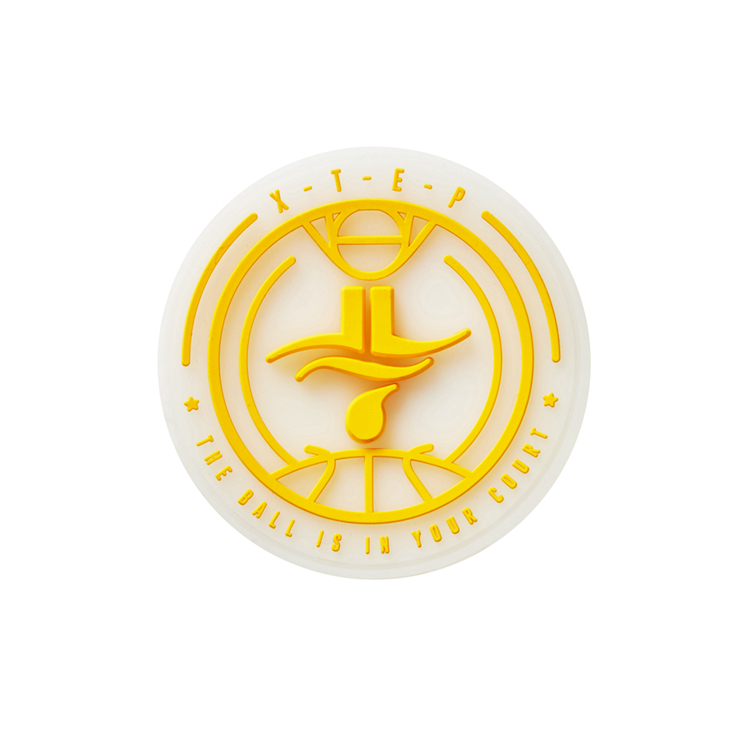
The heart of every high-performance transparent patch is an ultra-clear thermoplastic polyurethane film, often combined with a precision adhesive backing. Unlike standard rubber labels, these patches start with optical-grade clarity that allows the underlying fabric color and texture to show through completely. The logo itself is reverse-printed on the underside or encapsulated between layers using eco-solvent, UV, or silicone ink technologies. This construction protects the graphic from abrasion while giving the apparel logo a three-dimensional depth that prints alone cannot achieve.
Edge finishing plays an enormous role in both aesthetics and durability. Laser-cut contours produce smooth, sealed borders that resist fraying, curling, and lint trapping. The thickness typically ranges from 0.3 mm to 1.5 mm, enabling everything from a featherweight inline sensation for lightweight tees to a slightly raised, gel-like dome for outerwear and caps. Flexibility sits at the core of the material DNA. The film stretches and recovers with the garment, meaning the transparent patch never restricts movement or cracks when a jersey gets pulled over shoulder pads. A soft-touch matte or glossy top coat can be applied to match the brand’s desired hand feel, whether it is a muted satin finish for luxury athleisure or a high-shine wet look for street-inspired collections.
Breathability is another often overlooked engineering feat. Micro-perforations can be laser-drilled into the film before application, allowing moisture vapor and air to pass through. This keeps the apparel logo area from becoming a sweat trap during intense activity, a critical advantage for performance and compression wear. Combine this with OEKO-TEX Class I or Standard 100 certifications and you get a skin-safe component ready for infant apparel, next-to-skin baselayers, and even medical uniforms. The entire structure stays phthalate-free, PVC-free, and compliant with major restricted substance lists.
Where Transparent Patches Outperform on Apparel Logos
Garment categories that once relied on woven labels, silicone badges, or direct embroidery now rapidly adopt transparent patches for their logo execution. The shift is most visible in sportswear. Think of a cycling jersey where every gram counts. A paper-thin transparent patch adds virtually no weight, eliminates the chafing of stitched edges, and remains perfectly legible after repeated spins in the washing machine. Simultaneously, the absence of a fabric base or dense thread layer allows the jersey’s moisture-wicking grid to work unimpeded right under the brand mark.
Outdoor and technical outerwear benefit from the extreme weather resistance these patches deliver. A down jacket logo made with a transparent patch shrugs off rain, snow, and sub-zero temperatures without hardening. Waterproof membranes can be bonded directly to the backer film, making the entire appliqué fully sealed. On waterproof-breathable shells, the transparent patch maintains the garment’s hydrostatic head rating when applied with proper heat press parameters. There is no needle perforation, so the DWR treatment and tape seams remain intact, keeping the apparel logo from becoming a leak point.
Denim and casual bottoms represent another booming segment. Transparent patches placed above back pockets, on the coin pocket, or down the thigh present a sleek, modern alternative to leather-like jacrons. The film can mimic a leather grain while staying 100% vegan, or go completely crystal clear so the indigo dye shows through the logo lettering. This translucency opens creative doors: a branded monogram floating over bleached denim whiskers creates a visual effect impossible with opaque labels. After industrial stone washing and enzyme treatments, the transparent patch must endure aggressive mechanical action. The correct material grade resists yellowing, peeling, and delamination even after a full garment-dye cycle.
Kids’ apparel and school uniforms add a safety-focused dimension. The soft, stitch-free surface prevents irritation on sensitive skin, and the rounded corners remove any scratch hazard. For schools requiring visible ID, an apparel logo rendered as a transparent patch can incorporate a subtle reflective layer or a write-on area for names, merging practicality with crisp branding. The same benefits extend to accessories: backpack webbing, cap brims, neoprene lunch bags, and even footwear heel counters. In every context, the transparent patch remains loyal to the product’s original hand feel instead of imposing a stiff, foreign element.
| Apparel Category | Key Requirement | Transparent Patch Solution |
|---|---|---|
| Performance sportswear | Lightweight, non-chafing, moisture-compatible | Micro-perforated TPU with 0.3 mm thickness |
| Outdoor shells | Waterproofness, cold flexibility, no needle holes | Sealed backer film, DWR-friendly application |
| Denim and bottoms | Stone-wash durability, vegan appeal, design translucency | High-abrasion TPU with anti-yellowing UV stabilizer |
| Kidswear and uniforms | Skin safety, softness, name-tag option | OEKO-TEX Class I film, rounded contour |
| Bags and headwear | Curved surface bonding, scuff resistance | Flexible adhesive, high-bond edge sealing |
Real Performance Gains on the Finished Garment
Brands that transition to transparent patches often report a measurable uplift in perceived product quality. A consumer picking up a hoodie instinctively runs a thumb over the logo. Where an embroidery feels scratchy on the inside and a screen print shows the telltale glue rectangle, a transparent patch provides a smooth, integrated sensation. There is no backing paper, no stiff film window. The apparel logo simply becomes part of the fabric, elevating the entire garment from mass-market to premium tier. Retail conversion data shared by sportswear brands indicates that items featuring these seamless patches maintain higher sell-through rates and receive fewer returns related to label discomfort.
Durability under home laundry conditions is another striking outcome. Independent lab simulations following AATCC LP1-2021 wash protocols show that top-tier transparent patches retain 100% adhesion, zero edge lift, and unchanged color brilliance after 50 consecutive warm-water cycles. The reverse-printed graphic remains sealed inside the TPU sandwich, completely immune to detergent attack, fabric softener buildup, or mechanical peeling. This long-haul performance keeps the apparel logo crisp for the entire consumer use phase, preserving brand equity long after the point of sale.
Visual impact also evolves advantageously. Because the patch background is transparent, the logo gains a floating dimension that changes with the garment color and lighting. On a neon yellow running tee, the same transparent patch delivers one energetic statement; on a heather gray crewneck, it whispers sophistication. Designers gain the freedom to order one SKU of patches for multiple fabric colorways, streamlining inventory. The optical clarity remains stable over time when UV inhibitors are incorporated, preventing that frustrating amber tint that plagues cheaper PVC alternatives. Color fidelity of the printed logo stays exceptionally high due to the protective clear top layer, which acts like a permanent laminate.
Temperature resistance widens the use case further. Iron-safe up to 150°C and freezer-stable to -30°C, transparent patches survive the extreme conditions of commercial laundry, autoclave sterilization for medical apparel, and arctic expedition layering. Sublimation sportswear benefits especially: manufacturers can heat-press the transparent patch onto a fully sublimated panel without ghosting or reactivating the dispersed dyes, a feat not possible with many thin heat transfer films.
Comparative Advantage Across Branding Methods
The difference between a transparent patch and conventional logo applications becomes stark when evaluated across multiple performance vectors. The table below places the transparent patch side-by-side with embroidery, screen printing, heat transfer vinyl, and woven labels, focusing strictly on measurable attributes that affect garment integrity and consumer experience.
| Attribute | Transparent Patch | Embroidery | Screen Print | Heat Transfer Vinyl | Woven Label |
|---|---|---|---|---|---|
| Base visibility | None, fabric shows through | Opaque backing | Opaque ink film | Opaque carrier film | Opaque taffeta |
| Hand feel | Ultra-soft, stretchy | Stiff, often scratchy interior | Dry, can crack | Rubber-like, plasticized | Crisp, non-stretch |
| Moisture vapor transmission | Maintains fabric breathability | Blocks ventilation area | Blocks ventilation area | Creates sealed barrier | Traps moisture |
| Wash durability at 50 cycles | Zero lift, no fading | Thread wear, pilling | Cracking, fading | Edge peeling, peeling | Edge fraying, legibility loss |
| Application stitch holes | None, weld bond | Multiple needle punctures | None | None | Stitching required |
| Eco-material options | Phthalate-free, PVC-free, recyclable TPU | Polyester thread, synthetic stabilizer | Plastisol, phthalates | PVC common | Polyester yarn, dye |
| Three-dimensional effect | Encapsulated high-gloss depth | Raised threads | Flat | Slightly raised | Flat |
| Multi-color gradient capability | High-definition photorealistic | Limited, thread change | Halftone limitation | Layer or cut limitation | Limited yarn colors |
| Skin irritation risk | Medical-grade smooth | Seam friction | Chemical residue | Edge abrasion | Seam tag |
A direct comparison to silicone labels, which are sometimes marketed similarly, also favors transparent patches. Silicone holds thickness, yellows faster under UV, and requires longer cure cycles. Transparent patches using aliphatic TPU do not yellow, apply in 5–12 seconds with a heat press, and bond more aggressively to nylon, polyester, and cotton blends without a primer. When the goal is an apparel logo that disappears into the garment structure, the transparent patch wins on weight and integration every time.
Edge seal integrity deserves special mention. In abrasion tests using a Martindale machine under 12 kPa pressure, transparent patches withstand over 25,000 rubs without edge lift or surface scuffing. Screen-printed logos begin to erode at 5,000 cycles, and woven label edges fray within 3,000 cycles on rough shell fabrics. This robustness makes the transparent patch an easy choice for military, tactical, and workwear sectors that must meet severe wear protocols.
Testing Transparency and Toughness Under Controlled Protocols
No apparel logo component reaches commercial viability without passing a rigorous battery of third-party evaluations. Transparent patches undergo a suite of tests designed to simulate years of abuse in compressed timeframes. The following table collects the primary standards and the performance benchmarks that leading transparent patch suppliers consistently meet.
| Test Category | Standard / Method | Typical Transparent Patch Performance |
|---|---|---|
| Color fastness to washing | ISO 105-C06 / AATCC 61-2A | Grade 4-5, no staining on multifiber |
| Color fastness to rubbing | ISO 105-X12 / AATCC 8 | Dry: 4-5, Wet: 4 |
| Adhesion strength (peel) | ISO 2411 / ASTM D751 | > 15 N/50mm on polyester, > 12 N/50mm on nylon |
| Tensile strength and elongation | ASTM D412 | Tensile > 25 MPa, elongation > 400% |
| Tear resistance | ASTM D624 | > 80 N/mm |
| Flex cracking resistance | ISO 7854 / ASTM D2097 | No cracks after 100,000 cycles |
| UV aging (xenon arc) | ISO 105-B02 / AATCC 16.3 | Blue wool scale 7-8, zero yellowing |
| Heat resistance | 150°C for 30 seconds | No shrinkage, no delamination |
| Cold crack resistance | -30°C for 4 hours | No cracking, maintains flexibility |
| Restricted substances | OEKO-TEX Standard 100, REACH, CPSIA | Class I compliant, phthalate-free |
| Saliva and perspiration fastness | ISO 105-E04 / DIN 53160 | Grade 4-5, no color migration |
Simulated real-world scenarios often go beyond the lab. Several contract testing houses run the “weekend warrior test” where a hoodie carrying a transparent patch apparel logo cycles through salt water immersion, machine drying at 70°C, and continuous 24-hour wear against skin. The patches must emerge with no edge creep, no fogging inside the clear layer, and no loss of tactile softness. For children’s product certificates, additional bite and torque tests per 16 CFR 1500 ensure the entire appliqué remains intact and does not produce small parts. The transparency itself gets measured with a spectrophotometer, confirming that haze stays below 5% and light transmittance above 90% throughout the product lifespan.
Waterproofing interaction tests involve bonding a transparent patch onto a 20K/30K membrane laminate, then running a full hydrostatic head test per ISO 811. A correctly applied patch leaves the waterproof rating unchanged; there is no wicking channel through the film. This matters deeply to outdoor brands that cannot afford a logo to compromise a jacket’s storm-worthiness. Similarly, for flame-resistant garments, modified TPU grades pass vertical flame tests such as ASTM D6413, char length requirements, and after-flame times when engineered with FR additives. These certified transparent patches now appear on fire service station wear and electrical utility uniforms as identification badges, proof that an apparel logo can be both safe and stunning.
Seamless Integration into High-Speed Production
A product is only as strong as its application process. Transparent patches align perfectly with automated heat press lines, enabling placement accuracies within ±0.5 mm. No thread trimming, no curing tunnel, no manual ironing of cover sheets. The adhesive activates between 130°C and 150°C depending on formula, bonding within 8 to 15 seconds under medium pressure. Multi-station carousels can apply up to 600 apparel logos per hour, which dramatically reduces cost-in-bulk compared to digitized embroidery. After bonding, the garment can be folded immediately without cooling tunnels, a crucial flow advantage in lean factories.
On wash-down tests after 24 hours of curing, the shear strength of the adhesive further increases, often exceeding 20 N/50mm. This post-cure maturation helps garments that are packed and shipped within the same shift still reach the consumer with full bond integrity. For on-demand fulfilment houses, transparent patches offer another delight: digital reverse printing allows variable data, individualized names, and QR codes within the same transparent patch shape, without tooling changes. A single basketball team order can feature each player’s name and number embedded cleanly into a crystal apparel logo patch, all from a single digital print file.
Driving Brand Perception Through Material Innovation
Placing a transparent patch on an apparel logo communicates intentionality. Consumers consistently associate the high-tech transparency with premium electronics, modern automotive interiors, and luxury packaging. That psychological transfer elevates a blank T-shirt into a coveted brand staple. Market research panels note that participants describe the look as “clean,” “futuristic,” and “expensive.” The subtle gloss variation between a matte finish patch and the textile’s natural surface creates a sophisticated contrast that works across minimalist monochromatic apparel as forcefully as it does on bold, graphic-rich streetwear collaborations.
Inventory agility improves as well. Transparent patches in a generic shield or circular shape can carry seasonal graphics, event-specific insignias, or limited-drop emblems printed on demand. No deadstock of pre-embroidered colored logos piles up. Brands can keep a small buffer stock of unprinted transparent base patches and decorate in-house, compressing lead times from months to days. The operational flexibility cuts waste, aligns with on-trend sustainability commitments, and gives marketing teams the freedom to react to cultural moments instantly.
The Measurement of Success in Real Categories
Performance footwear brands have adopted transparent patches for tongue and quarter logos on running shoes. The result is a 360-degree visible brand mark that does not fray from lace friction. After 500 km of road running, lab dissections reveal that the transparent patch maintains full legibility while competitor heat-transfers show 30–40% graphic loss. Swimwear manufacturers report that transparent patches withstand repeated exposure to chlorinated water and sunscreen without delamination or sticky residue, outperforming silicone printed logos that degrade within one season. Cycling apparel teams highlight the aerodynamic benefit: the patch sits flush with zero air-trapping lip, offering a marginal gain that matters in time-trial disciplines.
The cumulative data paints an unmistakable picture. Transparent patches consistently deliver higher durability scores, better consumer comfort ratings, and greater design freedom than any traditional apparel logo execution method. They pass the strictest chemical and mechanical tests, they integrate into automated production without bottlenecks, and they flip the script on what a logo can look and feel like. By allowing fabric to play a role in the branding story through visible texture, color shifts, and breathability, the transparent patch redefines how an apparel logo connects with the person wearing it.
When the next collection brief calls for a logo that feels integral to the garment rather than applied onto it, the crystal-clear response sits ready. Transparent patches are not a compromise between aesthetics and function; they are the peak where both curves intersect, built layer by layer to withstand the harshest use while letting the fabric do the talking around the brand’s cleanest mark.
Embroidered Name Badges Your Path to Professional Branding
Patch It Your Way Order Custom Iron On Patches



