Sew On Patches for Jeans: Unmatched Advantages of the Timeless Application Method
2026-01-05
Table of Contents
- Main Title
- I. Introduction
- II. Core Advantage 1: Unrivaled Durability for High-Wear Garments
- III. Core Advantage 2: Superior Adhesion & Stability
- IV. Core Advantage 3: Versatility Across Denim Types & Patch Materials
- V. Core Advantage 4: Customization & Aesthetic Control
- VI. Core Advantage 5: Cost-Effectiveness & Accessibility
- VII. Counterpoint: Addressing Common Misconceptions About Sew-On Patches
- VIII. Conclusion
Unlike their temporary counterparts, sewn-on patches offer a combination of durability, stability, and versatility that aligns perfectly with denim’s rugged nature.
Jeans have transcended their origins as workwear to become a global fashion staple, celebrated for their durability, versatility, and timeless appeal. Yet, even the sturdiest denim succumbs to wear and tear—whether from daily use, outdoor activities, or accidental snags.
This is where patches step in: not just as a practical repair solution, but as a creative way to personalize garments, revive vintage pieces, or make a style statement. Among the various methods to attach patches—iron-on, adhesive-backed, and sew-on—sew-on patches stand out as the gold standard for jeans.
I. Introduction
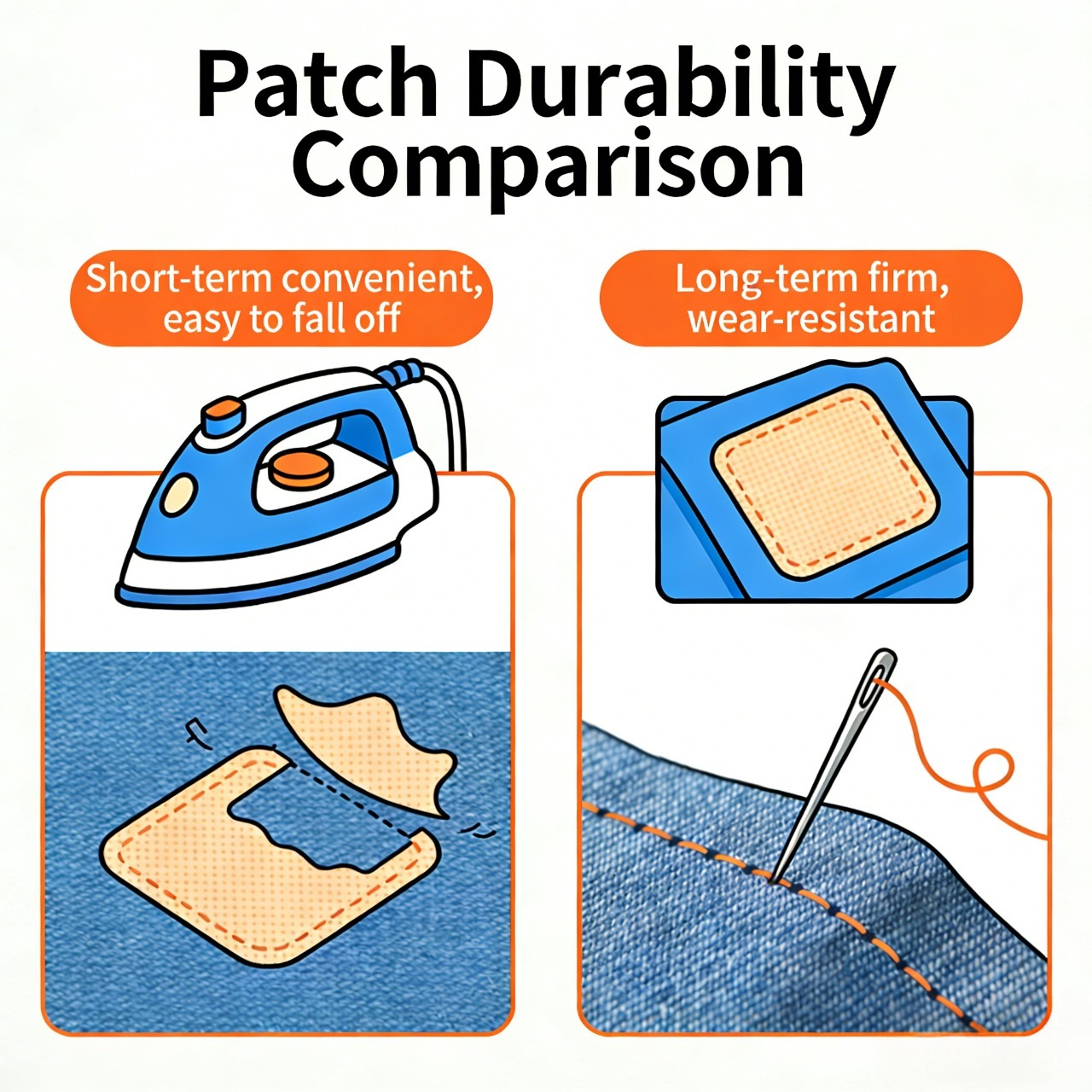
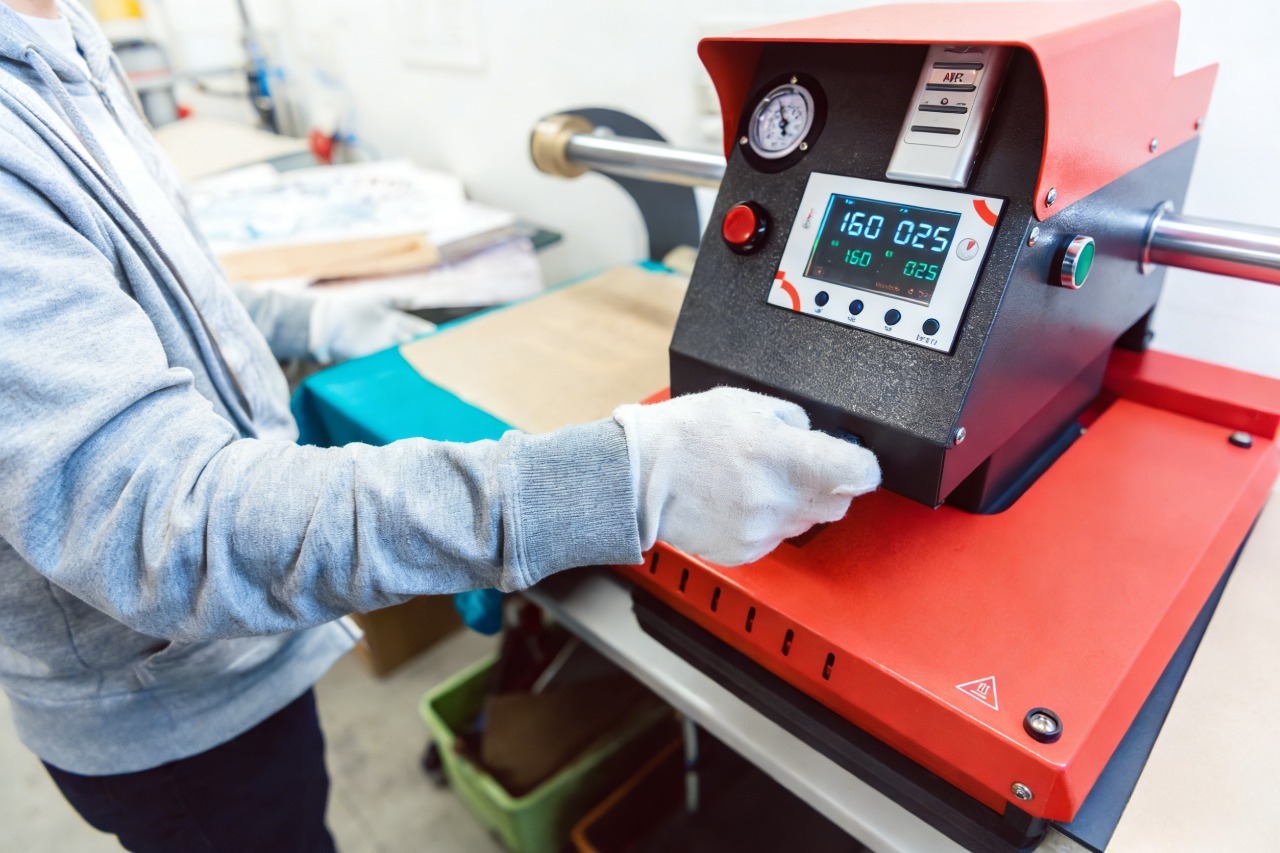
The popularity of jeans patches has surged in recent years, driven by two parallel trends: the rise of sustainable fashion (which encourages repairing rather than replacing clothing) and the desire for personalization in a mass-produced world. According to a 2025 report by the Sustainable Fashion Coalition, garment repair has become a $4.5 billion industry, with patches being one of the most accessible and cost-effective repair tools. However, not all patch application methods are created equal. Iron-on patches, for example, offer convenience—requiring only a heat source to adhere—but often fail to withstand repeated washes or heavy use. Adhesive-backed patches are even less reliable, peeling off within weeks of application, especially on high-stress areas like knees or pockets.
Sew-on patches, by contrast, rely on mechanical bonding through needle and thread, creating a permanent connection between the patch and the denim. This method has been used for decades in industrial settings, from construction workwear to military uniforms, where durability is non-negotiable. Today, it remains the top choice for anyone seeking a long-lasting solution that doesn’t compromise on style or functionality. Whether you’re repairing a hole in your favorite jeans, adding a logo to workwear, or customizing a vintage pair, sew-on patches deliver benefits that temporary methods simply can’t match. This article delves into five core advantages of sew-on patches for jeans: unrivaled durability, superior adhesion, versatility across materials, customization potential, and cost-effectiveness. By the end, it’s clear why sewn-on patches are more than just a practical choice—they’re a smart investment in garments that last.
II. Core Advantage 1: Unrivaled Durability for High-Wear Garments
Denim is designed to withstand rough use, and any patch attached to it should meet the same standard. Sew-on patches excel in durability because they integrate seamlessly with the fabric’s structure, creating a bond that resists friction, stretching, and the rigors of daily life.
A. Integration with Denim Fabric Structure
Denim is a woven fabric known for its strength, thanks to its twill weave pattern and thick cotton yarns. Iron-on and adhesive patches rely on chemical bonds that sit on top of the fabric, never fully integrating with its fibers. This means they’re prone to peeling or lifting when the jeans stretch or rub against surfaces. Sew-on patches, by contrast, use needle and thread to penetrate both the patch and the denim, creating a mechanical bond that locks the two materials together. The thread weaves through the fibers of the patch and the jeans, distributing stress evenly across the attachment point. This integration is especially critical for high-stress areas of jeans—knees, back pockets, hems, and thigh seams—where movement and friction are most intense. For example, a construction worker who wears jeans daily will find that a sewn-on knee patch stays in place for months, even with constant bending and contact with rough surfaces, while an iron-on patch would peel off within weeks.
B. Longevity through Washes and Use
One of the biggest drawbacks of iron-on patches is their inability to withstand repeated washing. The adhesive used in these patches breaks down with exposure to water, detergent, and heat, causing the patch to loosen or detach entirely. A study by the Textile Testing Institute found that iron-on patches typically last only 5–10 washes before showing signs of peeling, while sew-on patches can withstand 50+ washes without losing their hold. This is because the thread used in sewing is resistant to water and detergent, and the mechanical bond doesn’t degrade with cleaning. Additionally, sew-on patches are immune to heat damage from dryers. Iron-on patches can melt or lose adhesion when exposed to high dryer temperatures, but sewn-on patches remain intact, even with regular use of high-heat settings. For anyone who wears jeans frequently, this longevity translates to significant savings—no need to replace patches or jeans as often, reducing both cost and environmental impact.
C. Case Example: Industrial/Workwear Jeans
The durability of sew-on patches is proven in industrial settings, where workwear is subjected to extreme conditions. Companies like Carhartt and Dickies, which specialize in workwear, have long used sewn-on patches for their jeans and jackets. For instance, Carhartt’s classic duck cotton patches are sewn onto the knees and pockets of their work jeans, designed to withstand abrasion from tools, machinery, and outdoor work. These patches are stitched with heavy-duty thread in a zigzag pattern, ensuring maximum hold even in the most demanding environments. Workers in construction, farming, and landscaping rely on these sewn-on patches to extend the life of their jeans, often wearing the same pair for years. This real-world application demonstrates that sew-on patches aren’t just a hobbyist’s choice—they’re a professional-grade solution for garments that need to perform under pressure.
III. Core Advantage 2: Superior Adhesion & Stability
A patch is only useful if it stays in place, and sew-on patches offer unmatched stability compared to temporary methods. Whether you’re wearing your jeans for a hike, a day at the office, or a night out, sewn-on patches won’t lift, curl, or detach—even after years of use.
A. Secure Attachment without Edge Lifting
Edge lifting is a common problem with iron-on and adhesive patches. Over time, the edges of these patches start to curl away from the fabric, creating an unsightly look and increasing the risk of complete detachment. This happens because the adhesive only bonds to the surface of the denim, and any movement or stretching breaks the weak chemical bond. Sew-on patches eliminate this issue by stitching around the entire perimeter of the patch, as well as at stress points like corners and curves. The thread acts as a barrier, holding the patch firmly against the denim and preventing edges from lifting. For irregularly shaped patches—such as logos with curved lines or decorative designs—sewing is particularly effective, as it allows for precise stitching along the contour of the patch. A zigzag stitch, for example, conforms to the edges of the patch, creating a tight seal that resists curling.
B. Resistance to Environmental Factors
Jeans are worn in a wide range of environments, from humid summer days to cold winter months, and patches need to withstand these conditions. Iron-on patches are sensitive to humidity and sweat, which can weaken the adhesive and cause the patch to peel. Adhesive patches fare even worse, as moisture breaks down the glue entirely. Sew-on patches, however, are unaffected by environmental factors. The thread used in sewing is typically made from cotton, polyester, or a blend, all of which are resistant to humidity, sweat, and exposure to chemicals like detergent or bleach. Additionally, sewn-on patches remain stable in extreme temperatures. In hot climates, iron-on patches can melt or lose adhesion, while in cold weather, the adhesive can become brittle and crack. Sew-on patches, by contrast, maintain their hold in temperatures ranging from -20°C to 60°C, making them suitable for all seasons and climates.
C. Comparison: Iron-On vs. Sew-On Patch Longevity
To illustrate the difference in adhesion, consider a side-by-side test: attach an iron-on patch and a sew-on patch to two identical pairs of jeans, then wash both pairs once a week for three months. After 12 washes, the iron-on patch will likely be peeling at the edges, with significant lifting along the seams. The sew-on patch, by contrast, will remain firmly attached, with no signs of detachment. This difference is due to the nature of the bond: chemical adhesion vs. mechanical stitching. Iron-on patches rely on the adhesive to stick to the denim, but over time, the adhesive degrades, especially with exposure to water and heat. Sew-on patches, however, use thread to weave the patch into the denim, creating a bond that’s as strong as the fabric itself. For anyone who wants a patch that will last for years, not months, sew-on is the clear choice.
IV. Core Advantage 3: Versatility Across Denim Types & Patch Materials
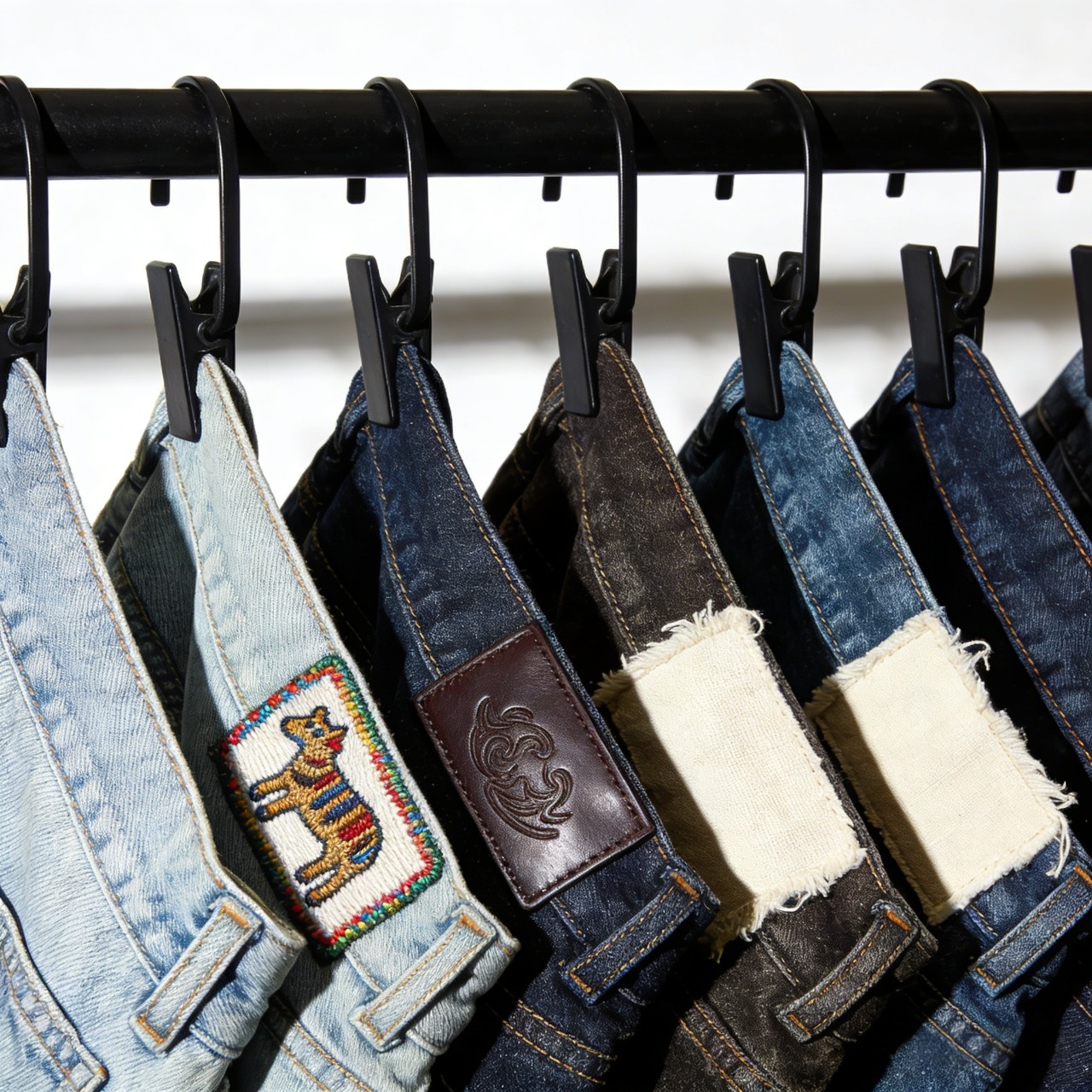
Jeans come in a wide range of styles and fabrics, from lightweight summer denim to heavyweight raw denim, and patches are available in materials ranging from embroidered thread to leather and canvas. Sew-on patches are uniquely versatile, working with virtually any denim type and patch material, while iron-on and adhesive patches are limited by their reliance on heat or glue.
A. Compatibility with All Denim Weights
Denim weight is measured in ounces per square yard (oz/yd²), with lightweight denim ranging from 8–10 oz/yd², medium-weight from 11–14 oz/yd², and heavyweight from 15–24 oz/yd². Iron-on patches can damage lightweight denim, as the heat required to activate the adhesive can scorch or melt the fabric. Heavyweight denim, on the other hand, is too thick for iron-on patches to adhere properly— the adhesive can’t penetrate the dense fibers, resulting in a weak bond. Sew-on patches, by contrast, work with all denim weights. For lightweight denim, a fine needle and thin thread can be used to avoid damaging the fabric, while heavyweight denim requires a thicker needle and heavy-duty thread to ensure penetration. This versatility makes sew-on patches ideal for any pair of jeans, whether you’re repairing a delicate summer style or reinforcing a rugged pair of work jeans.
B. Adaptability to Diverse Patch Materials
Patches are available in a wide range of materials, each with its own unique properties. Embroidered patches, for example, are made from thread stitched onto a backing, while leather patches are thick and rigid, and canvas patches are durable and breathable. Iron-on patches are limited to materials that can withstand heat—leather patches, for instance, can be damaged by the high temperatures required to activate the adhesive, and delicate embroidered patches may have their thread melt or warp. Adhesive patches are even more limited, as the glue may not bond with thick or textured materials like canvas or wool. Sew-on patches, however, can be attached to any patch material, regardless of thickness or texture. For thick leather patches, a heavy-duty needle and thread can penetrate both the patch and the denim, creating a secure bond. For delicate embroidered patches, a fine needle and matching thread can be used to avoid damaging the threadwork. This adaptability means you can use sew-on patches to attach virtually any design to your jeans, from vintage leather logos to intricate embroidered patterns.
C. Flexibility for Patch Placement
Jeans have curved surfaces and hard-to-reach areas—knees, thigh seams, back pockets, and belt loops—that can be challenging for iron-on patches. Iron-on patches require a flat, hard surface to apply evenly, making them difficult to attach to curved areas. Adhesive patches fare slightly better but still struggle to conform to curved surfaces, leading to uneven adhesion. Sew-on patches, however, are highly flexible, allowing for precise placement on any part of the jeans. The thread can be stitched around curves and contours, ensuring the patch adheres tightly to the fabric. For example, attaching a patch to the knee of jeans— a curved, high-movement area— is easy with sewing, as the thread can follow the shape of the knee, creating a secure bond that moves with the fabric. Additionally, sew-on patches can be layered, a popular style trend that involves attaching multiple patches to a single pair of jeans. Iron-on patches are difficult to layer, as the heat from applying a second patch can damage the first, but sew-on patches can be layered without any issues, allowing for endless creative combinations.
V. Core Advantage 4: Customization & Aesthetic Control
Sew-on patches offer unparalleled customization options, allowing you to tailor the look of your jeans to your personal style. Unlike iron-on patches, which come with a pre-applied adhesive and limited design options, sew-on patches let you control every aspect of the application—from the thread color to the stitch pattern—turning a simple patch into a unique design element.
A. Stitching as a Design Element
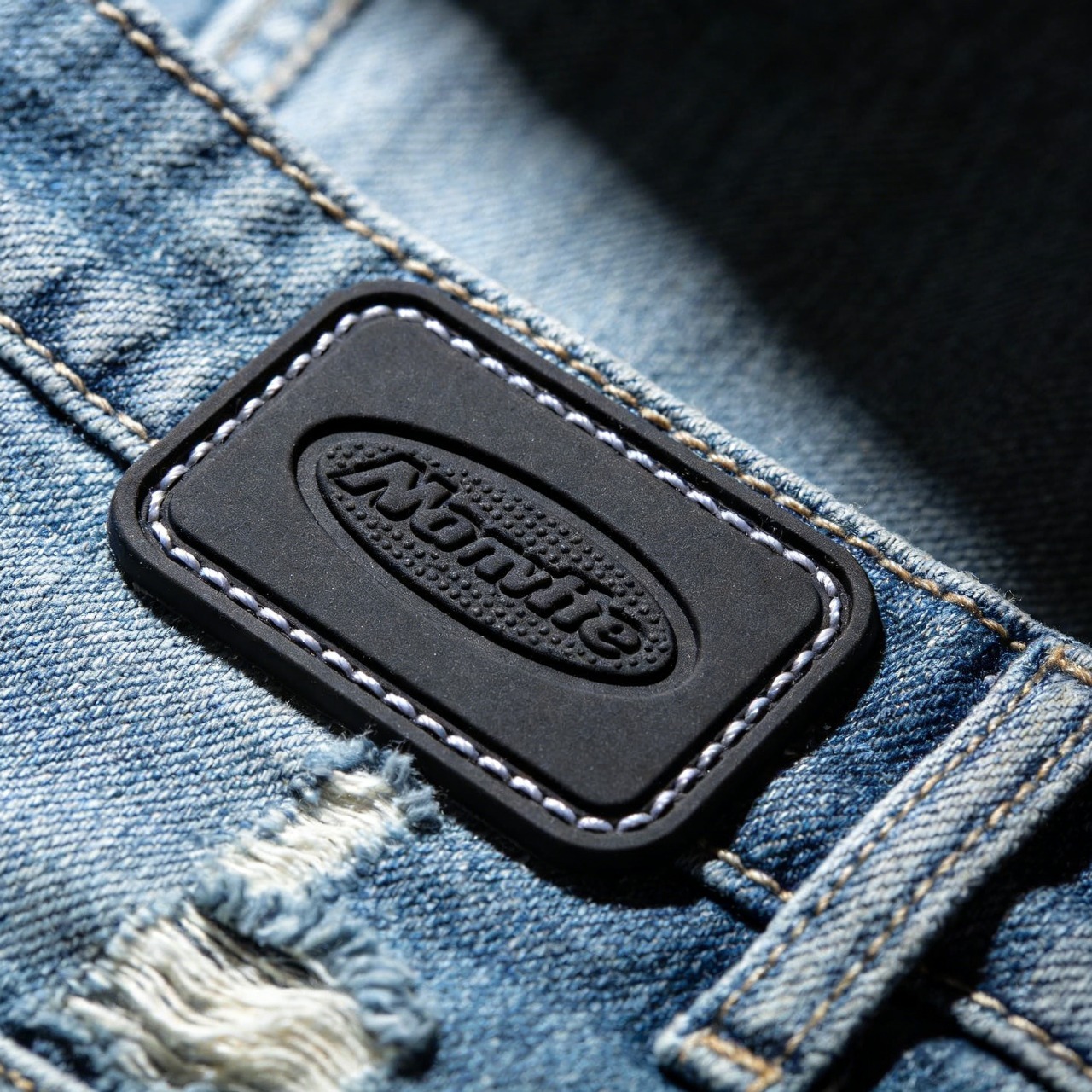
The thread used to attach a sew-on patch is more than just a functional tool—it’s a design feature. You can choose a thread color that matches the patch or jeans for a subtle look, or opt for a contrasting color to make the stitching stand out. For example, a black patch on blue jeans can be stitched with white thread for a bold, eye-catching effect, or with navy thread for a more understated look. Additionally, you can experiment with different stitch patterns to enhance the design of the patch. A straight stitch is simple and classic, while a zigzag stitch adds texture and durability. For a decorative touch, you can use a blanket stitch, which creates a scalloped edge around the patch, or a cross-stitch for a more intricate look. These stitching options allow you to personalize your jeans in ways that iron-on patches can’t—turning a generic patch into a one-of-a-kind detail.
B. Precision in Placement
One of the biggest frustrations with iron-on patches is that once they’re applied, they can’t be repositioned. If you make a mistake in placement, you’re stuck with it, or you risk damaging the jeans by trying to remove the patch. Sew-on patches eliminate this problem, as you can adjust the placement of the patch before stitching it into place. You can pin the patch to the jeans, try them on, and reposition it as needed until you’re happy with the look. Additionally, if you decide to change the patch later, you can simply remove the stitches and replace it with a new one—no residue, no damage to the jeans. This flexibility is ideal for anyone who likes to update their style regularly or experiment with different patch designs.
C. Handmade Charm
In a world of mass-produced fashion, handmade details are increasingly valued for their uniqueness and authenticity. Hand-sewn patches add a artisanal touch to jeans, creating a look that can’t be replicated by machine-applied patches. Each stitch is slightly different, giving the patch a one-of-a-kind character that resonates with sustainable fashion trends. According to a 2022 survey by Etsy, 78% of consumers are willing to pay more for handmade or customizable products, as they value the personal connection and craftsmanship. Hand-sewn patches also align with the “slow fashion” movement, which encourages mindful consumption and the creation of garments that are made to last. By sewing a patch onto your jeans, you’re not just repairing or customizing them—you’re creating a piece of clothing that has meaning and personality.
VI. Core Advantage 5: Cost-Effectiveness & Accessibility
Sew-on patches are not only durable and versatile—they’re also cost-effective and accessible to anyone, regardless of skill level. Unlike iron-on patches, which require additional tools like a heat press or iron, sew-on patches can be applied with a basic sewing kit, making them a budget-friendly option for DIYers.
A. Minimal Tools Required
To apply a sew-on patch, you only need a few basic tools: a needle, thread, scissors, and pins. These tools are affordable and readily available—most households already have a sewing kit, and if not, a basic kit can be purchased for less than $$10. Iron-on patches, by contrast, require a heat source (an iron or heat press), which can cost$$20 or more, and replacement adhesive strips for reapplication. Additionally, sew-on patches don’t require any special materials or chemicals, making them an eco-friendly option. The thread used in sewing is biodegradable (if made from cotton) or recyclable (if made from polyester), and there’s no risk of harmful chemicals leaching into the environment, unlike some iron-on adhesives.
B. Repairability and Reusability
Sew-on patches are easy to repair if they become loose. If a few stitches come undone, you can simply re-stitch the area, extending the life of the patch and the jeans. Iron-on patches, by contrast, are difficult to repair—once the adhesive fails, the patch is essentially useless. Additionally, sew-on patches can be removed and reused on other garments. If you grow tired of a patch on your jeans, you can cut the stitches, remove the patch, and attach it to a jacket, backpack, or another pair of jeans. This reusability reduces waste and saves money, as you don’t need to buy a new patch every time you want to update your style.
C. Accessibility for All Skill Levels
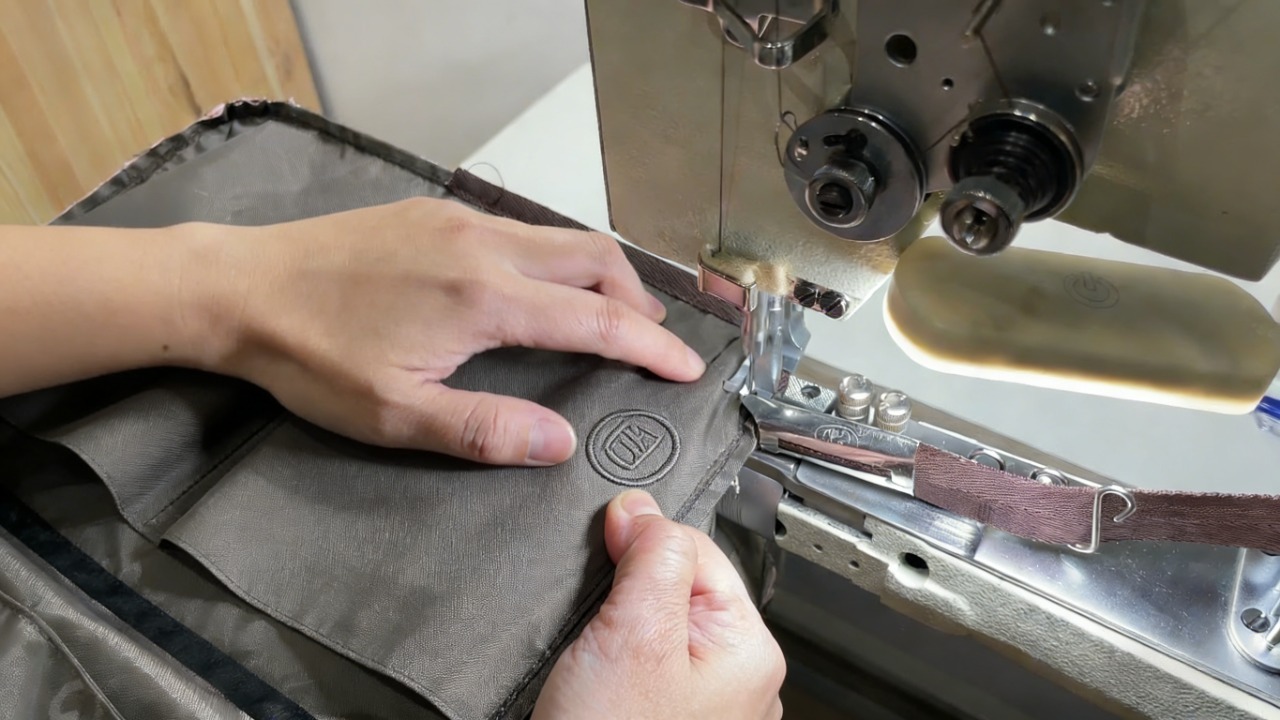
Many people assume that sewing a patch requires advanced skills, but this couldn’t be further from the truth. Basic hand-sewing techniques are easy to learn, and even beginners can apply a sew-on patch in 15–30 minutes. There are countless tutorials available online (on YouTube, Pinterest, and DIY blogs) that walk you through the process step by step, from threading a needle to finishing the stitches. Additionally, self-threading needles and pre-cut thread make the process even simpler for those with limited dexterity. For anyone who prefers not to hand-sew, a sewing machine can be used to apply the patch in minutes, creating a professional-looking finish. This accessibility means that anyone can enjoy the benefits of sew-on patches, regardless of their sewing experience.
VII. Counterpoint: Addressing Common Misconceptions About Sew-On Patches
Despite their many advantages, sew-on patches are often dismissed due to common misconceptions. Let’s address these myths and explain why they’re unfounded.
A. “Sewing is time-consuming”
While it’s true that sewing a patch takes longer than applying an iron-on patch (which takes 5–10 minutes), the time investment is minimal compared to the longevity of the result. A basic sew-on patch takes 15–30 minutes to apply by hand, and a sewing machine can reduce that time to 5 minutes or less. When you consider that an iron-on patch will need to be replaced every few months, the total time spent on reapplication adds up quickly. Sewing a patch once saves you time in the long run, as you won’t have to repeatedly replace it. Additionally, many people find the sewing process therapeutic—a chance to slow down and engage with their clothing in a meaningful way.
B. “Requires skill”
As mentioned earlier, sewing a patch requires only basic skills that are easy to learn. You don’t need to be a master seamstress to apply a sew-on patch—you just need to know how to thread a needle and make a straight stitch. Self-threading needles eliminate the frustration of threading a needle, and pre-measured thread ensures you have enough to complete the job. Additionally, many patches come with pre-punched holes along the edges, making it easy to guide the needle through the fabric. With a little practice, anyone can apply a sew-on patch with a neat, professional finish.
C. “Less convenient than iron-on”
While iron-on patches are more convenient in the short term, they’re far less convenient in the long run. Iron-on patches peel off after a few washes, requiring you to reapply them or buy new ones. Sew-on patches, by contrast, are applied once and last for years, eliminating the need for repeated maintenance. Additionally, sew-on patches don’t require a heat source, which means you can apply them anywhere—whether you’re at home, traveling, or camping. This makes them more convenient for anyone who wants a reliable solution without the hassle of reapplication.
VIII. Conclusion
Sew on patches for jeans are more than just a practical repair tool—they’re a versatile, durable, and customizable solution that enhances the longevity and style of your garments. From their unrivaled durability and superior adhesion to their flexibility and cost-effectiveness, sew-on patches offer advantages that iron-on and adhesive patches simply can’t match. They integrate seamlessly with denim fabric, withstand repeated washes and extreme conditions, and work with virtually any patch material and denim type. Additionally, they offer endless customization options, allowing you to personalize your jeans to your unique style.
In a world where sustainability and durability are increasingly important, sew-on patches align perfectly with the values of slow fashion—encouraging us to repair and reuse our clothing rather than replace it. They’re accessible to anyone, regardless of skill level, and the time invested in sewing a patch is minimal compared to the years of use it provides.
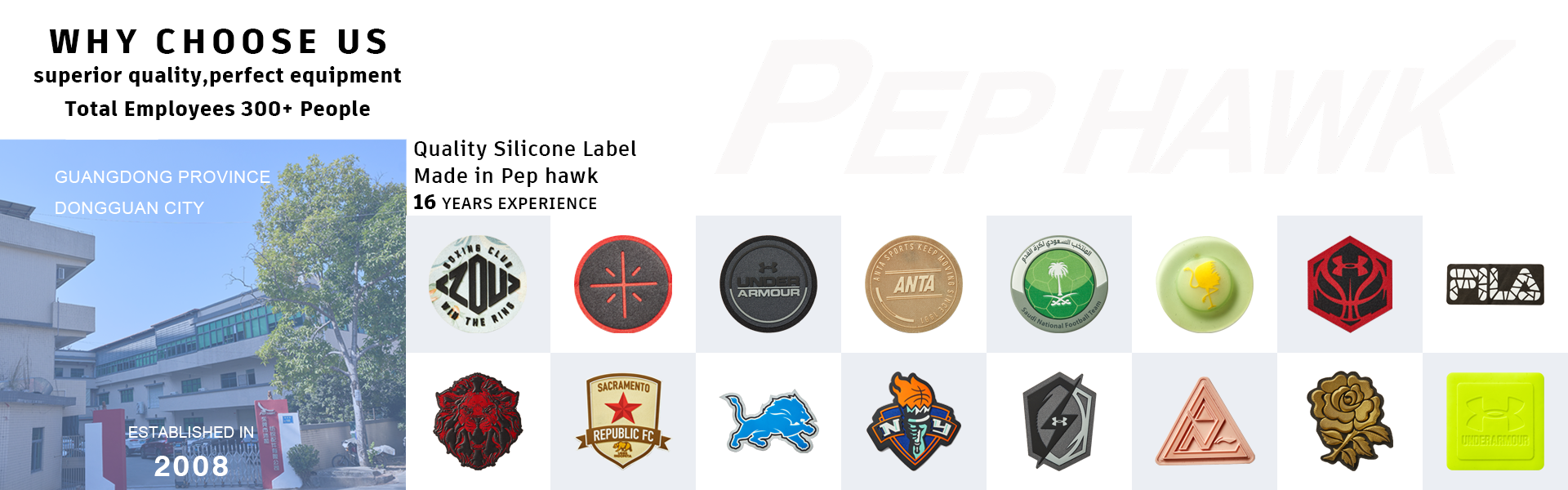
If you’re looking for a reliable, stylish way to repair or customize your jeans, look no further than sew-on patches. And for premium, high-quality sew-on patches that are designed to last, explore PEPHAWK’s collection. As a leading manufacturer of textile accessories in Dongguan, China, PEPHAWK offers a wide range of sew-on patches for jeans—from embroidered logos to leather patches—crafted with the same attention to detail and durability that has made us a trusted partner for businesses and consumers worldwide. With PEPHAWK’s sew-on patches, you can repair your jeans, express your style, and invest in garments that will stand the test of time.
Choose sew-on patches for jeans—because when it comes to durability, style, and value, nothing compares to the timeless appeal of a well-stitched patch.
PEPHAWK is proud to highlight ourintegrated one-stop service—seamlessly combining professional design, R&D, and manufacturing capabilities to deliver cohesive, end-to-end solutions for our valued clients.
Our core product range covers a diverse selection of high-quality accessories and silicone-based items, including:
- Garment Accessories: Silicone Labels, Micro Fiber Labels, TPU Labels, Leather Labels
- Electronic & Lifestyle Gadgets: Silicone Mobile Phone Skins, Silicone MP3 Skins, Silicone Chaplets, Silicone Bracelets
Beyond our core offerings, we also connect clients with complementary products through our trusted affiliated companies, ensuring all your needs are met under one partnership.
What sets us apart is our specialized expertise in key manufacturing processes: Silk Screen Printing, High-Frequency Welding, Sublimation Printing, Seamless Fabric Processing, and Laser Cutting. These capabilities allow us to serve a wide array of industries—from garments, shoes, caps, and gloves to electronic devices, bags, and sporting equipment—with products that blend durability, functionality, and aesthetic appeal.
At PEPHAWK, customer satisfaction is our top priority. We’re committed to providing responsive, thorough support, andguarantee a same-day response to all inquiries—no exceptions. You can rely on us for consistent quality, reliable delivery, and a partnership that’s as efficient as it is trustworthy.
Whether you’re looking for custom apparel labels, protective silicone skins, or tailored manufacturing solutions, PEPHAWK has the expertise and flexibility to bring your vision to life.
Iron-On Clothing Patches: Where to Stick Them on Every Garment
Durable Clothing Patches: The Essential Role of Quality Logo Labels


SEND MESSAGE