

Rubber Patches for Hats Your Complete Guide to Durable Custom Branding
Table of Contents
Rubber patches for hats solve this by delivering a three-dimensional, weatherproof badge that refuses to peel, crack, or lose its pop.
What Are Rubber Patches for Hats?
Rubber patches for hats are three-dimensional emblems manufactured from pliable, durable polymers—primarily PVC (polyvinyl chloride) or silicone rubber—designed to be affixed to headwear. Unlike woven or embroidered patches that rely on thread and are susceptible to abrasion and moisture, these patches are molded as a single solid piece. The material allows for deep relief, fine details, and crisp edges that hold up under prolonged UV exposure, rain, and repeated flexing of the cap fabric.
The fundamental construction involves a front decorated surface carrying the logo or text, and a back surface prepared for attachment. Because the decorative face is integrally molded rather than printed or stitched on top, the design cannot peel off. The finished patch feels slightly flexible yet dense to the touch, providing a premium, tactile upgrade over flat alternatives.
Types of Rubber Patches for Hats
Rubber patches for hats are typically categorized by material and backing attachment method. Knowing the differences helps you match the patch to the hat fabric and the intended activity level.
By Material
-
PVC Rubber Patches: Soft yet tough, PVC allows for photographic detail and extreme color accuracy. It can reproduce fine lettering and gradients using a soft enamel-style fill. Standard PVC patches perform exceptionally well in cold and wet conditions without hardening.
-
Silicone Rubber Patches: These have a more matte, velvety surface with a softer hand feel. Silicone offers higher heat resistance and excellent non-slip properties. They are widely used for minimalist debossed logos and outdoor gear because they remain pliable in freezing temperatures.
-
Combination Molded Patches: Some designs embed glow-in-the-dark pigments, reflective glass beads, or color-shifting flakes directly into the rubber during the molding process, adding functional visibility without extra layers that could separate.
By Attachment Method
-
Sew-On Patches: A thin, flat border around the patch is perforated or left plain so the patch can be stitched directly onto the hat crown or brim. This is the most permanent method and ideal for structured caps.
-
Adhesive Backed Patches: A high-tack pressure-sensitive adhesive is applied to the back and protected with a release liner. Simply peel and stick. Works best on smooth, low-flex areas and smooth fabrics.
-
Hook-and-Loop (Velcro) Patches: The back features hook material that fastens to a loop panel sewn onto the hat. This allows swapping patches on the same cap, a popular feature in morale and tactical hat design.
Specifications and Data Sources
When evaluating rubber patches for hats, relying on measurable parameters ensures you receive a product that meets durability and aesthetic requirements. The following technical data is consolidated from standard polymer processing references, ASTM test methods, and typical manufacturer specification sheets within the promotional products industry.
-
Thickness: 1.5 mm to 3.0 mm. Most hat patches use a 2.0 mm gauge to balance flexibility with a pronounced 3D presence without adding excess weight that could distort the cap fabric.
-
Hardness: Shore A 50–70. Measured per ASTM D2240, a durometer reading in this range gives a rubbery, bendable feel. Softer compounds (50–55) provide more grip; harder compounds (65–70) maintain sharper edge definition on thin lines.
-
Temperature Resistance: -25°C to 85°C. PVC compound maintains flexibility down to -25°C before becoming brittle; silicone patches can withstand up to 200°C intermittent exposure. This range ensures the patch survives machine washing and extreme outdoor conditions without cracking. Data is based on thermal analysis (DSC) from raw material supplier datasheets.
-
Tensile Strength: ≥ 5 MPa. Represents the material’s resistance to tearing when stitched. Sourced from ISO 37 tensile testing data for elastomers.
-
Color Matching: Pantone Solid Coated references are used. Reputable production references the Pantone Formula Guide to mix pigment into the liquid PVC or silicone before molding, achieving a Delta E (color difference) of less than 2.0 relative to the target swatch, as verified by a spectrophotometer.
-
Weathering Resistance: After 200 hours of QUV accelerated weathering (ASTM G154), color shift rated on the Grey Scale remains at 4 or higher, and surface shows no chalking or cracks. This translates to years of outdoor use without significant fading.
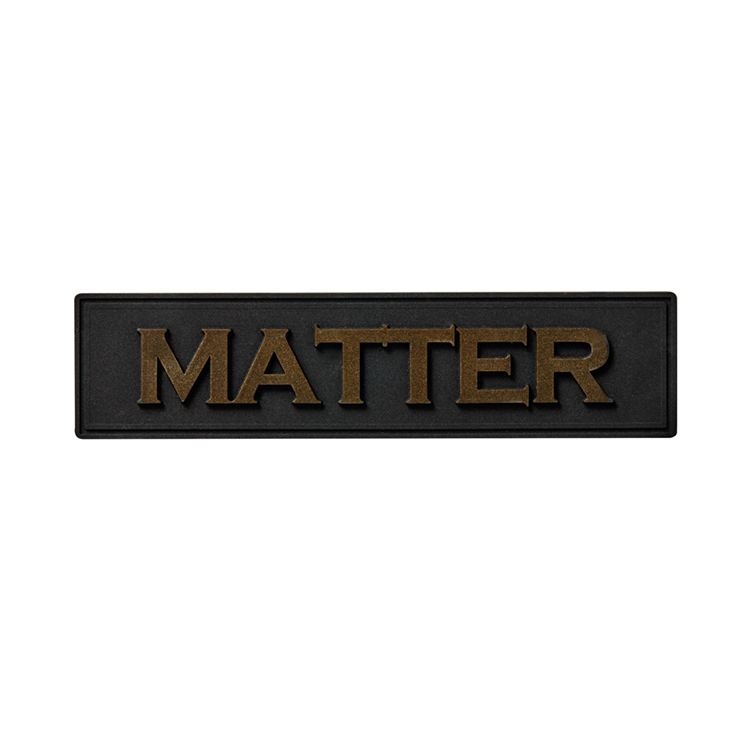
Applications of Rubber Hat Patches
The versatility of rubber patches for hats makes them a default choice where visual impact and ruggedness intersect. You’ll find them on trucker caps with foam fronts, because the dense rubber sinks nicely into the foam and stays put. Structured high-crown baseball caps use sewn rubber patches to replace embroidered logos for a modern, tactical look. Beanies and winter hats benefit from silicone patches that remain soft against the fabric’s stretch. Outdoor bucket hats feature large molded rubber emblems as a statement piece that also resists saltwater damage. Beyond basic headwear, corporate outdoor teams, fishing charters, summer camp staff, and craft brewery clubs all utilize rubber patches for hats as a long-lasting uniform detail that outlasts thread-based branding.
[Insert application image: A person wearing a dad cap with a vibrant 3D rubber patch on the front, standing outdoors in sunlight, highlighting how the patch holds color and detail.]
How to Choose the Right Rubber Patch for Your Hat
Follow these five steps to select a rubber patch that perfectly matches your hat’s style and functional demands.
Step 1 – Analyze the Hat Material
Check the fabric and structure of the cap crown. For unstructured, floppy hats like five-panels or soft beanies, choose a silicone patch with 1.5 mm thickness and a Shore A 50 durometer so the patch moves with the fabric instead of fighting it. For rigid, structured fronts like snapbacks, a 2.5 mm PVC patch with a sew-on border works best.
Step 2 – Determine the Attachment Method
Decide if the patch needs to be permanent or interchangeable. If the hat will be heavily washed or is for a fixed team identity, sew-on is the most durable. If the promotion relies on patch trading or daily morale patches, a hook-and-loop backing is essential. For one-off event caps where sewing isn’t practical, opt for an adhesive backing with a pressure-activated acrylic adhesive.
Step 3 – Match Material to Environment
For hats used primarily in wet, cold, or marine settings (fishing, skiing), silicone patches offer superior low-temperature pliability and water resistance without plasticizer migration. For urban streetwear and indoor corporate giveaways, PVC provides the sharpest detail and widest color gamut.
Step 4 – Define Design Detail Threshold
Measure the minimum line width in your logo. PVC can hold a raised line as thin as 0.3 mm, while silicone typically requires a minimum of 0.5 mm to avoid tearing during demolding. If your design includes very small text, specify PVC and request a 2D embossed style to keep those fine elements clean.
Step 5 – Verify Spec Tolerances
Before approving a bulk order, request a pre-production sample and check thickness with a caliper, confirm Shore hardness if possible, and compare the molded color against a Pantone chip under daylight. Ensure the back attachment aligns with your hat type—sew channel width needs to be at least 2.5 mm to allow easy stitching.
[Insert selection guide image: A flat lay showing three hat patches with different backings—sew-on channel, velcro hook, and red adhesive liner—alongside a caliper measuring patch thickness.]
Frequently Asked Questions
What is the standard thickness of rubber patches for hats?
The typical thickness ranges from 1.5 mm to 3.0 mm, with 2.0 mm being the most common choice for a balanced 3D look on baseball caps.
What material are these patches made of?
Rubber patches for hats are predominantly made from PVC or silicone rubber. PVC delivers vivid color and fine detail, while silicone gives a softer touch and better extreme-temperature performance.
How hard or soft is a rubber hat patch?
Hardness is measured between Shore A 50 and 70. A patch at Shore A 55 feels soft and flexible; a patch at Shore A 70 is firmer and holds sharper edge detail.
Are rubber patches for hats waterproof?
Yes. Both PVC and silicone patches are inherently waterproof and do not absorb moisture, making them suitable for rain, sweat, and machine washing.
What temperature extremes can these patches handle?
They remain flexible from -25°C up to 85°C. Silicone variants can endure even higher intermittent heat without deforming.
How are rubber patches attached to hats?
Patches are supplied with sew-on borders, peel-and-stick adhesive backing, or hook-and-loop fasteners. The attachment method directly affects washability and permanence.
Will the color fade in the sun?
Quality rubber patches use UV-stable pigments. After 200 hours of accelerated weathering testing, the color retains a Grey Scale rating of 4 or higher, meaning minimal visible fading even with prolonged outdoor use.
Can I match a specific brand color?
Yes, colors are precisely matched using Pantone Solid Coated references, with a typical color difference (Delta E) maintained below 2.0 relative to the target swatch.
What is the smallest detail that can be molded?
PVC patches can reproduce a raised line as fine as 0.3 mm. Silicone requires a slightly thicker minimum line width of 0.5 mm to hold up during production.
Sticker Vinyl Guide Types Parameters Applications And Selection Steps
·How to Choose Durable Custom Hoodie Patches That Last



