

Why Your Outfits Fade into the Background: The Reflective Patch Secret That Claims Your Spotlight Forever
Shop our premium reflective patches for clothing, combining safety and fashion. Ideal for outdoor activities, these patches ensure you stand out in low light.
For over fifteen years immersed in the technical apparel and labeling sector – consulting for major outdoor brands, safety equipment manufacturers, and textile innovators – I’ve witnessed the transformative journey of reflective patches from purely utilitarian safety add-ons to sophisticated, integrated design elements. While often mandated by regulation, their true value lies in the seamless marriage of life-saving functionality and evolving aesthetic sensibility. Understanding their science, application, and strategic implementation is no longer optional for brands serious about user safety and market relevance; it’s a core competency. My experience spans specifying materials for Fortune 500 safety programs, troubleshooting adhesion failures in extreme environments, and collaborating with designers to elevate reflective elements from afterthoughts to signature features. This deep dive cuts through the noise, grounded in the realities of manufacturing, regulation, and end-user needs.
The Imperative: Why Reflective Patches Are Non-Negotiable
The fundamental purpose of reflective patches is unequivocal: enhancing wearer visibility in low-light conditions to prevent accidents. This isn't theoretical; it's a matter of life and death, particularly for workers in transportation, construction, emergency services, and even recreational users like cyclists and runners. Consider the stark reality highlighted in occupational safety data: the U.S. Occupational Safety and Health Administration (OSHA) consistently identifies struck-by incidents, often occurring during dawn, dusk, or night work, as a leading cause of fatalities in construction. Their 2019 report on workplace fatalities underscored that inadequate visibility was a critical contributing factor in numerous nighttime incidents involving moving vehicles or equipment. Reflective patches, strategically placed on high-movement areas (sleeves, shoulders, ankles), act as critical visual cues, allowing drivers or operators precious extra seconds to perceive and react to a person’s presence. While high-visibility garments (like ANSI/ISEA 107 or EN ISO 20471 compliant vests) provide the foundational background, patches offer targeted, high-intensity retroreflection precisely where it maximizes detection – especially when the wearer is in motion. Ignoring this element isn't just non-compliant; it's a profound liability risk and a failure of duty of care.
The Science of Seeing: How Reflective Technology Works
Not all "reflective" materials are created equal, and understanding the underlying technology is paramount for effective application. The gold standard for safety-critical patches is engineered retroreflective sheeting, predominantly utilizing glass bead or prismatic (cube corner) technology.
- Glass Bead: Microscopic glass spheres are embedded in a binder layer on a reflective backing (often aluminum). Light entering the beads is refracted, reflected off the backing, and returned towards the light source (like a car's headlights). While cost-effective and offering good flexibility for garment integration, bead technology generally provides lower retroreflective intensity (measured in candelas per lux per square meter, cd/lx/m²) compared to prismatic, especially at wider angles.
- Prismatic (Cube Corner): This advanced technology uses precisely molded micro-prisms (often acrylic or polycarbonate) that act like tiny mirrors. Light entering the prism undergoes total internal reflection, bouncing off three facets before being directed precisely back to its source. This results in significantly higher retroreflective performance (often 2-4x brighter than bead at critical angles) and superior performance over a wider range of observation angles – crucial when a driver is not perfectly aligned with the wearer. Prismatic sheeting, while typically more expensive and sometimes slightly less flexible, is increasingly the standard for high-performance safety patches due to its superior visibility at greater distances and off-axis angles, a critical factor validated by testing standards like EN ISO 20471.
The efficacy isn't just about raw brightness; it's about consistency and durability. Reputable patch manufacturers (like 3M Scotchlite™, Avery Dennison Reflexite™, or Orafol) subject their materials to rigorous testing for wash fastness (ISO 6330), abrasion resistance, flexing, and exposure to chemicals and UV light. A patch that delaminates after five industrial washes or loses 50% of its reflectivity in sunlight is worse than useless – it creates a false sense of security. My work routinely involves reviewing test certificates and conducting accelerated aging trials to ensure patches meet the longevity demands of the intended use case, whether it's a daily-worn work jacket or a seasonal running vest.
Strategic Integration: From Compliance Stamp to Design Element
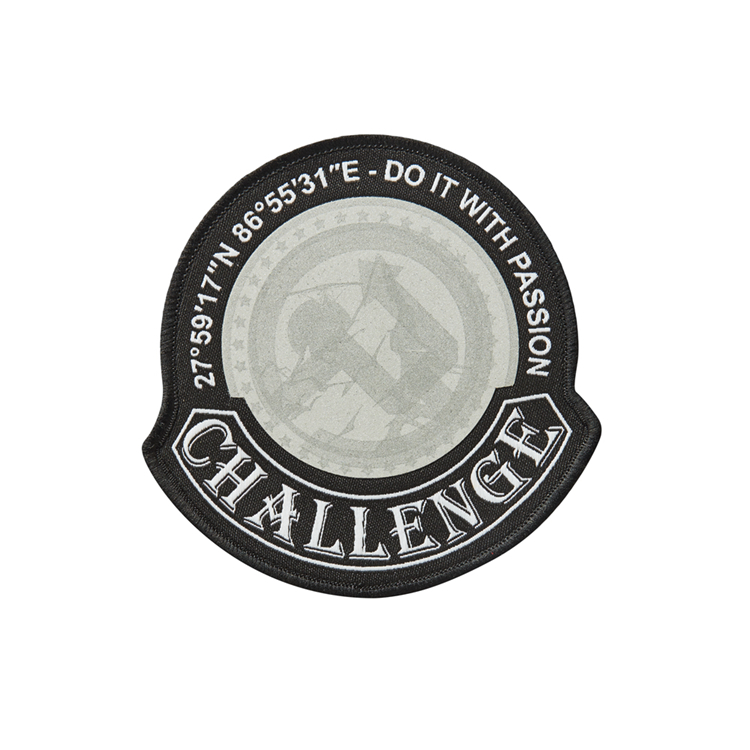
The outdated model of slapping a generic silver stripe onto a sleeve is rapidly fading. Today’s discerning market – both B2B safety managers and B2C consumers – demands integrated safety. This is where the expertise of the clothing label specialist becomes invaluable. Reflective patches are no longer confined to fluorescent orange backgrounds. Modern sheeting comes in a surprising array of colors (yellows, greens, reds, even blacks that become brilliantly reflective) and can be die-cut into intricate logos, brand marks, or subtle geometric patterns. The key is strategic placement guided by standards like ANSI/ISEA 107 or EN ISO 20471, which mandate minimum areas and placement zones for effective conspicuity, but also by ergonomic understanding. Patches on moving joints (elbows, knees) create dynamic visual cues far more effective than static chest strips. Collaborating closely with garment designers early in the process allows patches to become intrinsic to the product’s identity – think a premium outdoor brand using a subtle reflective logo on a hood or cuff that only reveals itself when needed, enhancing both safety and perceived value. I’ve seen brands transform compliance costs into competitive advantages by leveraging reflective patches for brand differentiation, moving beyond the "safety vest" stigma to create gear that users want to wear because it performs and looks good.
The Future: Smart Integration and Sustainability
The trajectory of reflective patch technology points towards even deeper integration and intelligence. We are seeing the emergence of multi-functional patches incorporating conductive elements for wearable tech connectivity or even subtle heating elements. While still nascent, the potential for patches that dynamically adjust reflectivity based on ambient light or integrate with IoT safety systems is actively being explored by material science leaders. Simultaneously, sustainability is a non-negotiable driver. Leading manufacturers are investing in recycled content for backing films and adhesives, and developing processes to improve recyclability at end-of-life – a complex challenge given the multi-layer composite nature of high-performance sheeting. Brands must proactively engage with suppliers on Environmental Product Declarations (EPDs) and lifecycle assessments. Furthermore, the rise of performance-driven consumer apparel (athleisure, premium outdoor) is accelerating the demand for ultra-thin, highly flexible, and launderable reflective solutions that maintain performance through dozens of washes without stiffening the fabric – a significant technical hurdle we’ve helped several clients overcome through material selection and bonding process optimization.
Conclusion: An Essential Layer of Modern Apparel
Reflective patches have evolved far beyond simple regulatory checkboxes. They represent a critical convergence point of safety science, material engineering, brand strategy, and user experience. As a practitioner deeply embedded in this space, I stress that their selection and application demand expertise. Relying on cheap, uncertified materials or haphazard placement risks user safety and brand reputation. Conversely, thoughtfully integrating high-performance, standards-compliant reflective patches – leveraging the latest prismatic technologies, strategic design, and sustainable practices – delivers tangible benefits: demonstrably enhanced safety (as mandated by OSHA's focus on preventing struck-by incidents and codified in standards like ISO 20471), reduced liability, stronger brand loyalty, and a clear market differentiation. In an industry where visibility literally saves lives, the reflective patch is no longer an optional add-on; it’s an indispensable, expertly crafted layer of modern, responsible apparel. The brands that master this integration will lead the market, both ethically and commercially.
How to Make Your Logo Unforgettable: The Iron-On Patch Hack Top Brands Hide
How to Make Your Night Outfits Unforgettable: The Reflective Patch Hack Top Stylists Hide



