How to Choose the Perfect Iron-On Labels for Your Clothes?
Uncover the secrets to selecting the best iron-on labels for your garments. From fabric compatibility to design choices, make your clothing uniquely yours.
Have you ever ruined a favorite garment because an iron-on label peeled off after one wash? Or struggled with labels that crack, fade, or damage delicate fabrics? You’re not alone. Selecting the right iron-on labels for clothes seems simple, but it’s a common headache for DIY enthusiasts, small clothing brands, and parents personalizing kids’ outfits. With countless options flooding the market, how do you avoid costly mistakes and ensure your labels last? This guide cuts through the confusion by focusing on practical, problem-solving steps. We’ll explore key questions like: What makes a label durable? How do you match it to your fabric? And why do some labels fail despite following instructions? By the end, you’ll know exactly how to choose iron-on labels that stick, survive, and shine—saving time, money, and your wardrobe.
First, let’s clarify what iron-on labels actually are. These are adhesive-backed patches applied using heat from an iron, designed to bond permanently to clothing fibers. Unlike sew-on tags, they offer quick customization for branding, sizing, or personalization—ideal for startups launching apparel lines or parents labeling school uniforms. But here’s the catch: not all labels work universally. The wrong choice can lead to bubbling, shrinkage, or even fabric burns. So, how do you start? Begin by asking: What fabric am I labeling? This is non-negotiable. Natural fibers like cotton or linen need lower heat settings (around 270°F/130°C) to prevent scorching, while synthetics like polyester require higher temperatures (up to 320°F/160°C) for proper adhesion. Using a label designed for cotton on a polyester dress, for instance, often causes peeling because the adhesive can’t penetrate the tight weave. Always check the label’s compatibility chart—reputable brands like Avery or Labelie specify fabric types. If your garment mixes materials (e.g., a cotton-polyester blend), opt for versatile labels labeled “all-fabric” to avoid trial-and-error disasters.
Next, consider durability: Will this label survive real-world use? Iron-on labels face daily assaults—washing machines, dryers, and friction. A label that fades after three washes defeats the purpose. Prioritize labels with industrial-grade adhesives, such as heat-activated polyurethane, which resists water, detergents, and high heat. Look for certifications like Oeko-Tex Standard 100, ensuring the label is toxin-free and safe for skin contact—critical for children’s clothing. Test this by asking: How many wash cycles does it claim to endure? Quality labels withstand 50+ cycles; cheap imitations might fail at 10. Also, check if the label is reversible or has protective coatings. For active wear (think sports jerseys), choose flexible, rubberized options that stretch without cracking. If you’re branding premium products, invest in labels with UV-resistant inks to prevent sun-fading. Skipping this step risks peeling logos or illegible care instructions, tarnishing your brand’s professionalism.
Design and customization are equally vital: Does the label fit my aesthetic and functional needs? Size matters—a tiny label on a toddler’s jacket gets lost, while an oversized one on a silk blouse looks tacky. Measure your application area: standard sizes range from 0.5x1 inches for care tags to 3x2 inches for logos. For intricate designs, like custom embroidery-style prints, ensure the label supports high-resolution imaging; vinyl-based options often blur details. Color compatibility is another pitfall. Dark labels on dark fabrics fade into invisibility—opt for light backgrounds on dark clothes. If personalizing school uniforms, choose writable labels where names can be added post-application. Crucially, ask: Is the label eco-friendly? Sustainable brands now offer biodegradable or recycled materials, appealing to eco-conscious consumers. Ignoring design specifics leads to labels that clash with your garment’s style or become unreadable, defeating their purpose.
Application ease separates good labels from great ones: Can I apply this correctly without special tools? Many beginners ruin labels by mismanaging heat or pressure. Ideal labels include clear instructions: preheat your iron to the specified setting (no steam!), place the label on fabric, cover with parchment paper, and press firmly for 15–30 seconds. Avoid labels requiring industrial heat presses—these aren’t DIY-friendly. Test on a scrap fabric first to gauge adhesion. Pro tip: Labels with a “tack test” feature (a slight stickiness before full ironing) allow repositioning, preventing misalignment. If you’re labeling curved areas like collars, flexible labels bend without creasing. Skipping a test run often results in bubbling or misplacement, wasting labels and fabric.
Finally, address safety and cost: Is this label safe and worth the price? Cheap labels might contain phthalates or formaldehyde, risking skin irritation—especially for sensitive skin. Always verify safety certifications. Price-wise, don’t equate cost with quality; a $0.10/label pack from Amazon could outperform pricier artisanal options if it’s rigorously tested. Calculate long-term value: if a label lasts 100 washes versus 20, it’s cheaper per use. For small businesses, bulk discounts from suppliers like Sticker Mule make customization affordable without sacrificing durability.
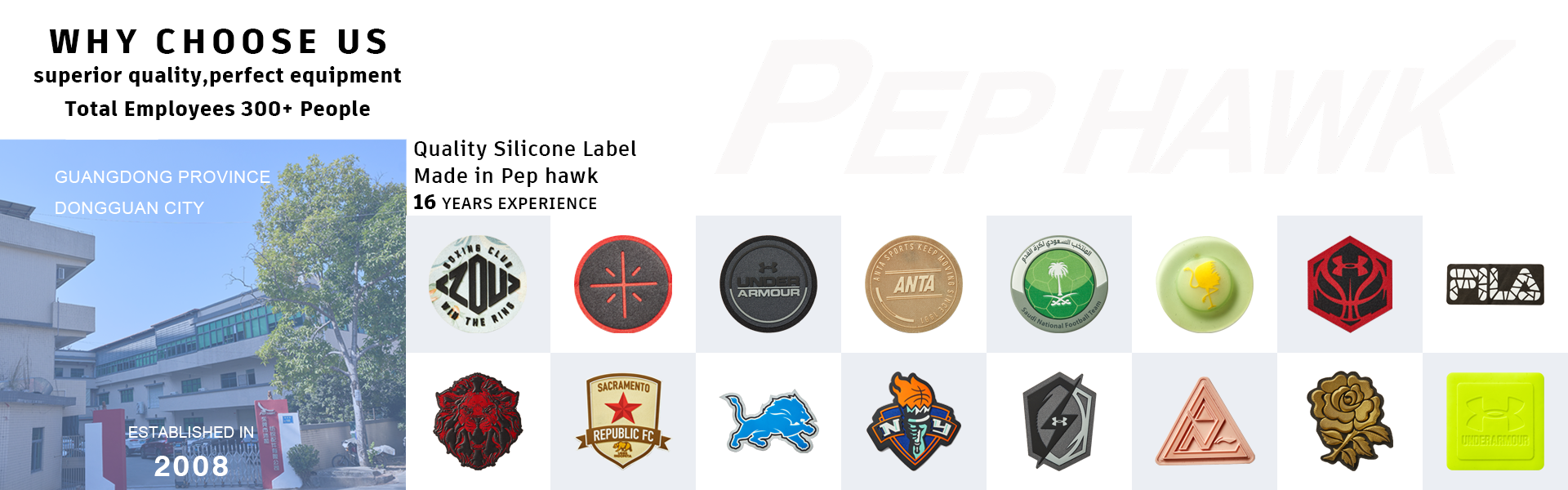
When confronted with the task of producing intricate design drafts of the highest quality, PEPHAWK is here to provide the perfect solution. With over 16 years of industry experience and our esteemed general manager boasting 31 years of expertise in the silicone industry, we are the ultimate choice for tackling your challenging logo design projects. Select PEPHAWK for our unmatched proficiency and rest assured in the impeccable outcomes we consistently deliver.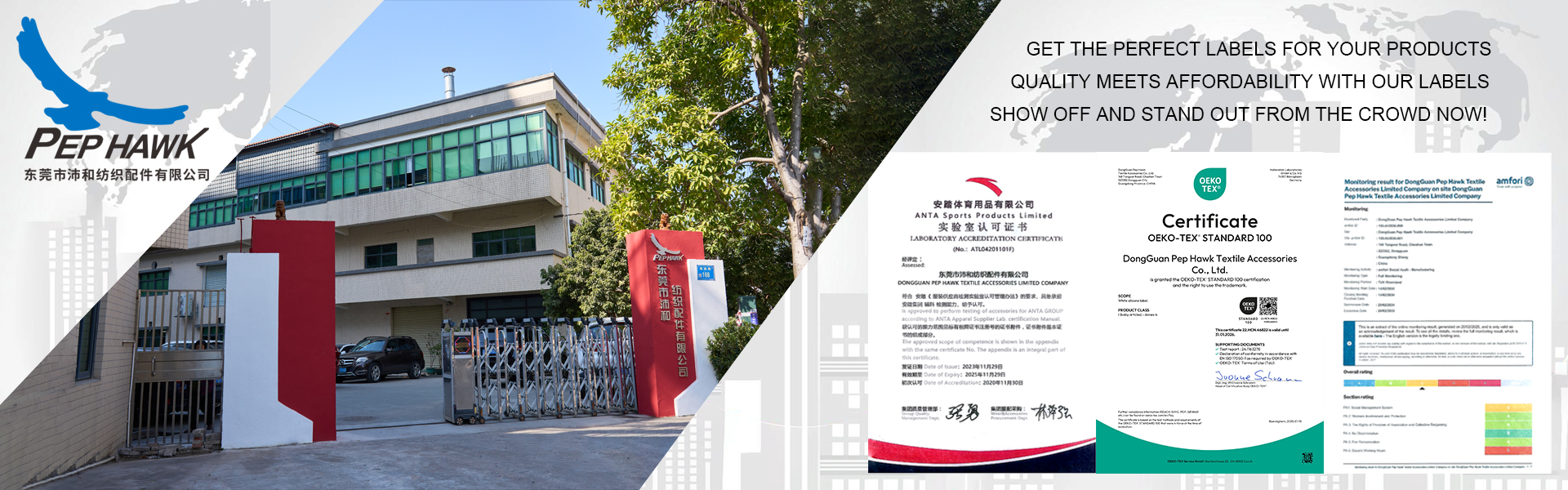
Why Have Sew-On Labels Continuously Improved?
Why Iron-On Labels Fail on Different Fabrics and How to Fix It