

Stop Feeling Invisible: How Crafting Patches Unlocks Your Joy and Identity
Unleash your creativity with custom patches! Design your own unique patches effortlessly and showcase your individuality. Begin your design journey today!
Why Patches Endure: Beyond Nostalgia to Strategic Asset
While evoking images of scout uniforms or vintage denim, modern custom patches serve sophisticated purposes. They offer unparalleled versatility for limited editions, seasonal collections, or membership programs without costly full-garment retooling. Crucially, they enhance perceived value – a study by the Specialty Graphic Imaging Association (SGIA, 2022) found that 78% of consumers associate embroidered logos (like those on patches) with higher quality and greater brand authenticity compared to printed alternatives. Patches also solve practical problems: reinforcing high-stress areas (like elbows on workwear), providing easy-to-apply branding on complex garments (think firefighter turnout gear), or enabling effortless customization post-purchase (a key driver for the booming DIY and resale markets). Ignoring the strategic depth of patch design means missing a direct line to consumer trust and product differentiation.
Material Mastery: The Foundation of Quality and Function
Your material choice dictates everything – drape, durability, color fidelity, and cost. This isn't guesswork; it's engineering for aesthetics.
- Backing Fabrics: The canvas matters. Terry cloth offers plush texture for casual wear but lacks structure. Felt (wool or synthetic) is the industry standard for its stability, crisp edge definition, and cost-effectiveness for complex shapes. For premium applications (luxury outerwear, military insignia), twill (cotton or polyester) provides a smooth, durable surface with excellent stitch definition and a subtly textured finish that elevates perceived value. Pro Tip: For curved edges on intricate designs, tightly woven twill minimizes fraying during cutting far better than felt.
- Thread Selection: Polyester is the dominant workhorse – UV-resistant, colorfast, and strong. Rayon offers a brilliant, high-sheen finish ideal for logos demanding vibrancy but sacrifices some durability. Cotton provides a classic matte look but fades faster. Crucially, thread weight (thickness) must align with design complexity; fine details require finer threads (e.g., 40wt), while bold outlines can use heavier weights (e.g., 30wt) for impact. Mismatched thread weight is a telltale sign of amateur patch production I see daily.
- Backing & Stabilizers: Often overlooked, these are non-negotiable for quality. Cut-away stabilizers provide permanent support for dense stitching on lightweight fabrics, while tear-away is suitable for stable bases like twill. Skipping stabilizers leads to puckering, distortion, and premature stitch failure – a costly error in production I've rectified for countless clients.
Design Principles: Translating Vision into Stitchable Reality
A stunning digital file doesn't guarantee a stunning patch. Understanding embroidery's physical constraints is paramount.
- Simplify for Stitch: Embroidery is built with stitches, not pixels. Avoid gradients, ultra-fine lines (<0.5mm), or minuscule text (<3mm height) – they become muddy blobs. Convert text to outlines and ensure letter spacing is generous. Complex vector art often needs significant simplification; a skilled digitizer (the technician translating art to machine code) will advise, but starting with clean, bold shapes saves time and cost. Remember: negative space is your friend; it reduces stitch count and production time.
- Color Strategy with Purpose: Each color change requires a machine stop. Limiting colors (ideally 5-8 for cost efficiency without sacrificing impact) is crucial. Consider Pantone Matching System (PMS) colors for brand consistency, but be aware that thread dye lots can vary slightly. Pro Tip: Use shading techniques (satin stitches, fill patterns) to create depth with fewer colors – a hallmark of expert patch design I consistently recommend.
- Edge Definition is Non-Negotiable: How the patch finishes its perimeter defines its professionalism. A merrowed border (a tightly overlocked edge, often in a contrasting thread) is the gold standard for durability and clean presentation, especially on felt. A laser-cut edge offers extreme precision on synthetic fabrics but requires careful material selection to prevent melting. A raw edge (simply cut) is prone to fraying and looks cheap – a red flag for quality-conscious brands. Specify your border type explicitly in your design brief.
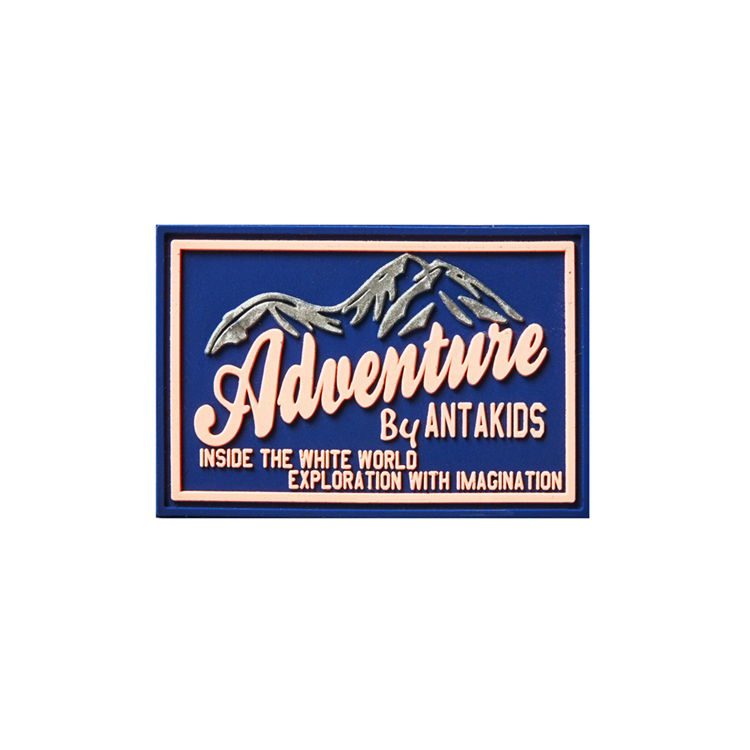
Production Pathways: Choosing the Right Method for Your Goals
The "how" impacts cost, speed, detail, and suitability:
- Embroidered Patches: The most versatile and durable option. Created by stitching designs directly onto backing fabric. Ideal for logos, text, and medium-complexity graphics. Offers excellent texture and longevity. Requires digitizing. Best for runs of 50+ units for cost efficiency. My go-to recommendation for brand-critical applications where quality must endure.
- Woven Patches: Threads are interlaced on a loom during fabric creation. Exceptional for fine details, small text, and complex gradients (like flags). Very durable and thin, lying flat on garments. Higher setup costs (shuttle creation) make them economical primarily for very large runs (1,000+ units). Common for military insignia and high-end fashion labels.
- Dye-Sublimated Patches: Graphics are printed onto fabric using heat transfer dyes. Allows for unlimited colors and photographic detail. Best suited for polyester-based fabrics to prevent bleeding. Less durable against abrasion and UV than embroidery; colors can fade. Ideal for highly detailed, complex imagery in moderate runs where extreme durability isn't the priority.
Strategic Application: Maximizing Impact and Longevity
Designing the patch is only half the battle. How it's applied determines its success:
- Attachment Method: Sew-on (most secure, traditional look), iron-on (heat-activated adhesive – convenient but less durable, especially with washing), or Velcro-backed (for interchangeability, popular in tactical/military). Always match the attachment to the garment's use case – iron-on on a child's backpack won't survive long.
- Placement Psychology: Consider the garment's flow. Chest patches signal pride, sleeve patches denote affiliation or achievement, back patches make a bold statement. Ensure placement doesn't interfere with garment function (e.g., over seams or stress points).
- Care Instructions: Include clear washing/drying instructions with the garment. Embroidered patches are generally durable, but excessive heat (dryers) and harsh chemicals degrade threads over time. Proactive care guidance preserves your brand's investment.
Conclusion: Stitching Value, One Patch at a Time
Designing custom patches is where artistry meets industrial precision. It demands respect for material science, embroidery mechanics, and strategic brand alignment. By grounding your design in material understanding, embracing the constraints of stitch, selecting the optimal production method, and planning for real-world application, you transform a simple accessory into a powerful, enduring emblem of your brand's identity and quality. As the market expands, driven by consumer demand for authenticity and customization, the brands that master this craft – treating patches not as afterthoughts but as core brand elements – will stitch themselves firmly into the fabric of their customers' loyalty. Remember, a poorly executed patch doesn't just look bad; it erodes the very trust you're trying to build. Invest in the expertise from the very first sketch.
When tackling intricate design projects that demand precision and excellence, PEPHAWK stands as your trusted partner. With 16 years of industry expertise and our general manager’s 31-year legacy in silicone innovation, we specialize in transforming complex logo concepts into flawless realities. Our seasoned team combines technical mastery with creative problem-solving to deliver unmatched quality, ensuring your vision is executed with meticulous attention to detail. Partner with PEPHAWK—where unparalleled experience meets cutting-edge craftsmanship.
End Generic Merch: How One Patch Turned Hats Into Walking Love Letters
Discover How to Craft Your Unique Identity with Custom Patches for Clothes



