

Custom Club Patches Elevate Team Identity With Durable Detail
2026-07-02
Custom club patches turn ordinary apparel into powerful symbols of belonging.
Table of Contents
- Core Design Elements of Custom Club Patches
- Available Materials for Custom Club Patches
- Technical Specifications and Product Parameters
- Backing and Attachment Options
- Production Process and Quality Control
- Applications Across Club Types
- Design Best Practices for Optimal Results
- Order Quantities and Lead Time
- Additional Product Parameters and Compliance Details
- Care and Maintenance Recommendations
- Final Notes on Selecting Custom Club Patches
From sports teams and social clubs to professional organizations and hobby groups, these small yet impactful accessories carry logos, mottos, and visual identity onto every uniform, jacket, bag, and hat. Clubs across industries rely on custom patches to build recognition, foster unity, and create lasting memorabilia that members wear with pride.
Modern manufacturing techniques have expanded the possibilities for custom club patches far beyond traditional embroidery. Brands and organizations now choose from a range of materials, finishes, and attachment methods to match their exact aesthetic and performance needs. Whether designed for a local soccer club, a motorcycle group, a school alumni association, or a corporate team, each patch serves as a wearable badge of membership that stands up to regular use.
Core Design Elements of Custom Club Patches
Every custom club patch combines multiple visual and structural elements that together define its look, feel, and durability. Below is a breakdown of the primary components that go into each piece.
Shape and Outline
The shape of a patch sets its first visual impression. Classic shapes include circles, shields, rectangles, ovals, and pennants, but fully custom die-cut shapes allow clubs to match their exact logo silhouette. Merrowed borders deliver a clean, finished edge with a raised stitched perimeter, while laser-cut edges produce sharp, precise lines ideal for intricate shapes and irregular outlines.
Primary Artwork and Logo Placement
The logo or crest sits at the center of every custom club patch. Artwork translates into the patch surface through different production methods depending on material choice. Fine linework, small text, gradient effects, and photographic details all influence which production technique delivers the best result. Vector artwork ensures the cleanest reproduction at any size.
Color Layering and Pantone Matching
Color accuracy matters for brand consistency. Custom club patches support Pantone color matching so team colors, brand hues, and accent shades reproduce exactly as intended. Multi-layer designs use separate color passes to build depth, highlight key details, and make emblems pop from a distance.
Text and Lettering Elements
Club names, founding years, mottos, player numbers, and location details often appear alongside the main logo. Lettering can follow curved paths, sit inside banners, or run along the patch border. Font thickness, size, and spacing adjust based on patch dimensions to maintain legibility even on smaller pieces.
Background Texture and Fill
Background areas use solid fills, patterned surfaces, textured effects, or transparent sections to support the main design. Some materials allow smooth, glossy backgrounds, while others deliver a matte or slightly textured finish that complements embroidered or raised details.
Finish and Surface Coating
Protective top coats enhance longevity and add visual character. Gloss finishes create a polished, vibrant look; matte finishes deliver a subdued, premium feel; and textured coatings add tactile depth. Certain materials naturally resist fading, cracking, and peeling even with frequent washing and outdoor exposure.
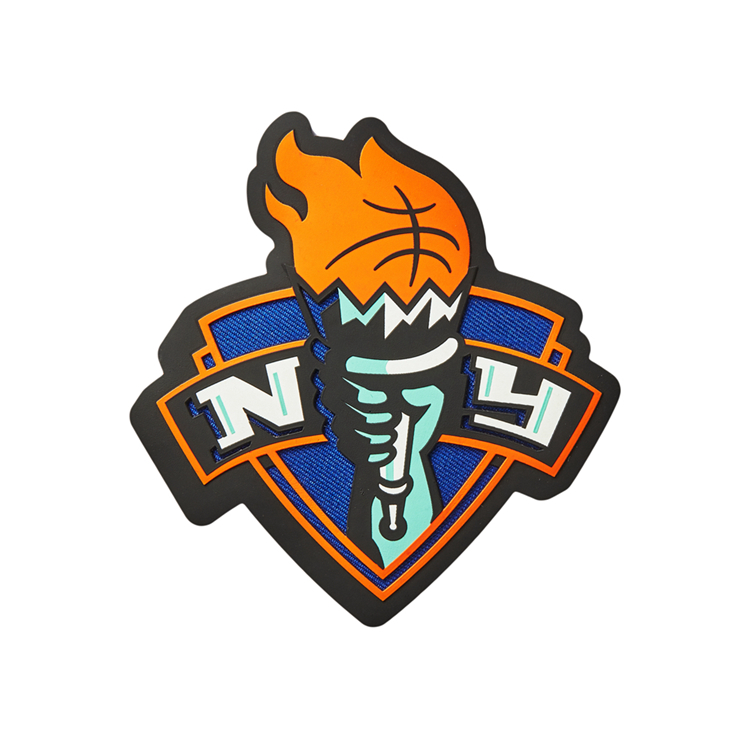
Available Materials for Custom Club Patches
Clubs choose materials based on intended use, desired look, budget, and performance requirements. The three most common base materials include TPU, silicone, and printing ink systems, each with distinct advantages.
TPU Patches
Thermoplastic polyurethane, or TPU, produces thin, flexible patches with excellent durability. TPU accepts high-detail printing and maintains shape through repeated bending, washing, and temperature changes. This material works well for athletic wear, outdoor gear, and any application where flexibility and weather resistance matter. TPU patches attach via heat press application and bond firmly to most fabrics.
Silicone Patches
Silicone delivers a soft, rubbery feel with superior elasticity and water resistance. Custom club patches made from silicone feature raised 3D details that create a tactile, premium appearance. The material stays flexible in cold conditions and resists cracking over time. Silicone patches work especially well on performance apparel, bags, and heavy-use outerwear.
Printing Ink Systems
Printing-based patches use specialty inks applied to base films or fabrics to reproduce full-color artwork with photographic precision. Sublimation, screen printing, and digital print methods each support different levels of detail, color vibrancy, and production volume. Ink-based patches excel at complex gradients, photorealistic imagery, and designs with many color transitions.
Additional Material Options
Beyond the three primary categories, clubs can combine materials for hybrid effects. For example, a patch might feature a silicone raised border with a printed TPU center, or a woven base with silicone accents. Reflective ink, glow-in-the-dark coatings, and metallic foil additions further expand creative possibilities.
Technical Specifications and Product Parameters
The following tables outline standard technical parameters for custom club patches across common production methods. Clubs can use these ranges as a starting point when planning their design and sizing.
Standard Size and Dimension Parameters
|
Parameter
|
Common Range
|
Typical Tolerance
|
Notes
|
|
Minimum patch size
|
20 mm × 20 mm
|
±0.5 mm
|
Suitable for hat sides, collar accents
|
|
Maximum standard size
|
200 mm × 200 mm
|
±1.0 mm
|
Larger sizes available on request
|
|
Thickness – TPU
|
0.3 mm – 1.0 mm
|
±0.05 mm
|
Thin profile, low feel on garment
|
|
Thickness – Silicone
|
0.8 mm – 3.0 mm
|
±0.1 mm
|
Raised 3D effect available
|
|
Border width – merrowed
|
2 mm – 3 mm
|
±0.2 mm
|
Classic stitched edge finish
|
|
Border width – laser cut
|
0.5 mm – 1 mm
|
±0.1 mm
|
Clean edge for custom shapes
|
Material Performance Parameters
|
Property
|
TPU
|
Silicone
|
Printed Ink Film
|
|
Wash resistance
|
50+ domestic washes
|
80+ domestic washes
|
40+ domestic washes
|
|
Temperature range
|
-20°C to 120°C
|
-40°C to 200°C
|
-10°C to 80°C
|
|
Flex resistance
|
Excellent
|
Superior
|
Good
|
|
Water resistance
|
Waterproof
|
Waterproof
|
Water resistant
|
|
UV fade resistance
|
Very good
|
Excellent
|
Good
|
|
Detail resolution
|
High
|
Medium
|
Very high
|
|
3D raised effect
|
Limited
|
Full support
|
Not available
|
Backing and Attachment Options
How a patch attaches to fabric determines its ease of application and long-term hold. Custom club patches come with several backing styles to suit different installation scenarios.
Heat Seal Backing
Heat seal backing, also called iron-on backing, applies with a standard heat press or household iron. The adhesive layer activates under heat and pressure, creating a permanent bond with most woven fabrics. Heat seal patches work well for bulk application and for teams that want to apply patches directly to uniforms in-house. Application temperature typically ranges from 140°C to 160°C with a press time of 10 to 15 seconds.
Sew-On Backing
Sew-on patches feature a plain fabric or film back designed for stitching around the perimeter. This method delivers the most secure, long-lasting attachment and works on heavy fabrics such as leather, denim, and thick jacket material. Many clubs choose sew-on backing for varsity jackets, leather vests, and heritage items that will last for decades.
Hook and Loop Backing
Hook and loop backing allows patches to attach and detach repeatedly. The hook side bonds to the patch, and the loop side sews or presses onto the garment. This backing style works well for tactical clubs, cosplay groups, and teams that swap patches between different pieces of gear. Velour loop tape provides the softest feel against fabric.
Peel-and-Stick Adhesive
Temporary peel-and-stick backing works for short-term events, trade shows, and one-time use. The pressure-sensitive adhesive sticks quickly to most smooth surfaces but is not intended for long-term wear or washing. Clubs often use stick-on patches for promotional giveaways and event swag.
Production Process and Quality Control
High-quality custom club patches follow a structured production workflow that ensures consistency across every unit in an order.
The process begins with artwork preparation and digital proofing. Design teams convert supplied logos into production-ready files, adjust colors to Pantone standards, and prepare layout templates for the chosen material. Clients receive a digital mockup for approval before manufacturing begins.
Next, tooling and mold preparation take place for silicone and embossed TPU styles. Printed patches move directly to film output and color calibration. Each production run includes a first-article inspection to verify color match, detail sharpness, edge quality, and backing alignment.
During production, automated cutting systems shape each patch to exact dimensions. Workers perform visual inspections at multiple stages to catch misprints, edge defects, or backing misalignment before pieces move to final packaging.
Finished patches pass through a final quality check that covers dimensional accuracy, color consistency, adhesive integrity, and surface finish. Orders then receive individual or bulk packaging ready for shipment.
Applications Across Club Types
Custom club patches serve every category of organized group, each with unique design priorities and performance needs.
Sports Clubs and Athletic Teams
Soccer clubs, baseball teams, basketball leagues, and martial arts academies use custom patches on jerseys, tracksuits, training bags, and caps. Durability and wash resistance rank highest for these applications. Silicone and TPU patches handle sweat, frequent laundering, and outdoor exposure better than many traditional options. Team crests, league badges, sponsor logos, and championship commemoratives all appear as custom patches.
Social and Hobby Clubs
Motorcycle clubs, hiking groups, gaming communities, and book clubs create patches for jackets, vests, backpacks, and hats. These groups often favor intricate artwork, custom die-cut shapes, and premium finishes that reflect their specific culture and identity.
Professional and Corporate Clubs
Industry associations, corporate teams, sales groups, and professional networks produce custom patches for uniforms, event swag, and employee recognition programs. Clean, professional designs with precise brand colors help maintain a polished, unified appearance across events and trade shows.
School and Youth Clubs
Student councils, robotics teams, debate clubs, and scout troops order custom patches for uniforms, hoodies, and backpacks. Bright colors, playful shapes, and readable text work well for younger age groups, while durability remains essential for active daily use.
Design Best Practices for Optimal Results
A few simple guidelines help clubs get the best possible outcome from their custom patch order.
Start with vector-format artwork whenever possible. Vector files scale without losing quality and produce the cleanest edges and sharpest details. Raster images such as JPGs and PNGs work for printed patches but may lose clarity at very small sizes.
Limit fine text to sizes large enough to remain legible after production. As a general rule, text should stand at least 5 mm tall for printed styles and 8 mm tall for raised silicone styles. Bold sans-serif fonts read more clearly than delicate script fonts at small dimensions.
Consider the background fabric color when choosing patch colors. High contrast between the patch and its garment makes the design stand out. For dark fabrics, light borders or outlines help define the patch shape.
Plan attachment method early in the design process. Heat seal backing requires a flat, smooth back surface, while sew-on placement should account for stitch line visibility around the border.
Order Quantities and Lead Time
Custom club patches support a wide range of order volumes, from small runs of 50 pieces for local clubs to bulk orders of 10,000+ pieces for league-wide distribution.
Small-batch orders typically ship within 7 to 10 business days after artwork approval. Mid-volume runs of 500 to 2,000 pieces require 10 to 15 business days. Large production runs of 5,000 pieces and above may need 15 to 20 business days depending on material complexity and finish requirements.
Rush production options exist for time-sensitive events and tournament deadlines. Clubs planning seasonal orders or championship patches should allow extra lead time to account for peak production periods.
Additional Product Parameters and Compliance Details
The following table covers additional technical and compliance parameters that factor into material selection and use cases.
|
Category
|
Specification
|
Details
|
|
Environmental compliance
|
REACH, RoHS compliant
|
Materials meet EU and global safety standards
|
|
Harmful substance test
|
Free of lead, phthalates
|
Safe for skin contact and children's apparel
|
|
Adhesive strength
|
≥15 N/cm peel strength
|
Heat seal applied to cotton-poly blend fabric
|
|
Shrinkage rate
|
≤2% after 5 washes
|
Tested at 40°C domestic wash cycle
|
|
Abrasion resistance
|
≥5,000 rub cycles
|
Martindale abrasion test method
|
|
Storage temperature
|
10°C to 30°C recommended
|
Avoid direct sunlight and high humidity
|
|
Shelf life of adhesive
|
12 months from production
|
When stored in recommended conditions
|
Care and Maintenance Recommendations
Proper care extends the life of custom club patches and preserves their appearance over time.
For apparel with heat-applied patches, wash garments inside out using cold or warm water on a gentle cycle. Avoid bleach, harsh detergents, and fabric softeners that can degrade adhesive and print layers. Tumble dry on low heat or hang dry away from direct sunlight.
Do not iron directly over the patch surface. If ironing the garment is necessary, iron from the reverse side or place a cloth between the iron and the patch. High heat can melt or warp TPU and silicone materials.
For sewn-on patches, follow the garment's normal care instructions. Stitched attachment withstands regular laundering well and rarely requires special treatment beyond avoiding abrasive scrubbing directly on the patch face.
Patches on bags and hard gear clean best with a damp cloth and mild soap. Avoid solvent-based cleaners that can damage printed inks and matte finishes.
Final Notes on Selecting Custom Club Patches
The right custom club patch balances visual impact, material performance, attachment method, and budget. Teams that prioritize wash durability and athletic wear often lean toward TPU or silicone constructions. Clubs focused on full-color artwork and photographic detail achieve the best results with premium printing ink systems on film bases.
Every order starts with clear artwork, defined dimensions, and a clear understanding of how and where the patches will be used. With the right combination of shape, color, material, and backing, custom club patches become more than decorative accessories—they become tangible symbols of membership that members keep and wear for years.
Clubs ready to move from concept to finished product can start by preparing their logo files, selecting a preferred size range, and identifying the primary garment or gear material for application. Those details help production teams recommend the optimal material and backing combination for long-lasting results.
Need me to adjust the keyword density, add more product-specific tables, or refine the tone for a B2B factory audience?
Hats for Patches Design Materials and Complete Specification
Heat Press for Iron On Patches: Your Complete Guide to Flawless Long Lasting Results




SEND MESSAGE