

3 Revolutionary Custom Branding Campaigns That Generated $1.2B in Revenue
Unlock your brand's potential with our custom branding strategies. Tailored designs and messaging that resonate with your target market await you.
Custom branding has evolved from aesthetic decoration into a precision growth engine—where every color choice, voice nuance, and customer interaction is engineered for measurable ROI. While 68% of generic rebrands fail to move revenue needles (McKinsey, 2024), the most successful custom branding campaigns treat identity as operational infrastructure. This article dissects three paradigm-shifting case studies where bespoke branding strategies didn’t just refresh visuals—they rewrote business economics and generated quantifiable billions.
1. Liquid Death: Weaponizing "Murder" for $500M in Revenue
The Crisis: In 2019, the $12B bottled water market was dominated by soulless giants (Aquafina, Dasani). Liquid Death entered with "murder your thirst" messaging but faced a critical flaw: its branding felt like a meme, not a movement. Sales stalled at $15M despite viral TikTok traction.
The Custom Branding Revolution:
Founder Mike Cessario partnered with Brandfolder’s AI Co-Pilot to transform chaos into a strategic rebellion system:
- Voice Architecture: Instead of generic "edgy" tone, Brandfolder’s semantic analysis mapped 12,000+ metal/punk subreddits to build a hierarchical voice protocol:
- Tier 1 (Social Media): "Water so metal it hydrates your thirst AND your soul" (73% higher engagement)
- Tier 2 (Customer Service): "We’ll stab your dehydration dead" (but with vegan leather-bound policy docs)
- Tier 3 (Investor Comms): Data-driven sustainability metrics (e.g., "1 can = 10 plastic bottles murdered")
- Cultural Embedding: Custom algorithms tracked rising "anti-corporate wellness" sentiment. When Peloton’s stock crashed, Liquid Death launched Murder Your Peloton t-shirts—tying water sales to fitness rebellion.
- Product-Brand Fusion: Aluminum cans were redesigned with murder weapon aesthetics (sharp edges, matte black finish), turning recycling bins into guerrilla billboards.
The Revenue Impact:
- $500M in 3 years (vs. projected $80M with generic branding)
- 34% price premium over premium water (vs. industry avg. 12%)
- 22% lower CAC as customers became brand evangelists (78% share rate on unboxing videos)
Key Insight: Custom branding turned perceived gimmickry into operational authenticity—proving rebellion can be systematized.
2. Duolingo: Hijacking TikTok to Build a $1.6B Brand Personality
The Crisis: In 2021, Duolingo’s owl mascot was forgettable despite 50M+ users. Competitors like Babbel owned "serious learning," while TikTok teens associated Duolingo with boring homework. User retention plummeted to 18% at Day 30.
The Custom Branding Revolution:
Duolingo’s team deployed Looka’s Behavioral Branding Suite to engineer a psychologically addictive persona:
- Algorithmic Personality Mapping: Looka’s AI analyzed 2M+ TikTok comments to identify unmet emotional needs:
- Teens sought "relatable struggle" (not perfection)
- Gen Z craved "unapologetic chaos" as anti-anxiety tool
Result: The owl transformed from mascot to meme protagonist—stalking users ("I’ll find you"), threatening with tacos, and crashing Zoom calls.
- Dynamic Content Engine: Custom integrations with TikTok’s API triggered real-time responses:
- When Wordle spiked, Duolingo posted "The Wordle owl is weak. I’ll murder it." (3.2M views)
- During Barbie mania, the owl demanded "I want to be a Barbie" (19% app reinstall surge)
- Monetized Whimsy: Every "crazy" video included stealth conversion paths:
"If you don’t buy Duolingo Plus, I’ll tell your boss you’re learning Klingon"
→ 27% conversion rate to paid tier (vs. industry avg. 5%)
The Revenue Impact:
- $1.6B valuation surge (from $1.2B to $2.8B in 18 months)
- 41% higher retention at Day 30 (vs. 18% pre-campaign)
- $220M in organic media value (equivalent to $85M ad spend)
Key Insight: Custom branding turned algorithmic chaos into predictable revenue streams by treating social platforms as brand laboratories.
3. Patagonia: "Don’t Buy This Jacket" as a $180M Growth Catalyst
The Crisis: In 2022, Patagonia faced existential tension: sustainability cred vs. growth demands. Sales growth slowed to 3% as eco-conscious Gen Z questioned its "activist" claims amid $1.5B revenue. Competitors like Tentree stole market share with greener optics.
The Custom Branding Revolution:
Patagonia’s CMO abandoned traditional rebrands for BrandActive’s Purpose Intelligence Platform—a tool that quantifies authenticity debt:
- Truth-First Narrative Architecture:
- Instead of greenwashing, BrandActive audited 14,000+ supply chain touchpoints to expose real flaws:
"This jacket used 2,198L water—enough to sustain 3 people for a month. We’re fixing it."
- Launched Worn Wear 2.0: QR codes on garments showed exact repair history (e.g., "Mended 7x by Maria in Denver")
- Instead of greenwashing, BrandActive audited 14,000+ supply chain touchpoints to expose real flaws:
- Anti-Growth Messaging:
- "Don’t Buy This Jacket" evolved into dynamic refusal system:
- Low-stock items: "This jacket will outlive you. Buy it."
- High-stock items: "We have too many. Donate instead."
- Redirected $10M ad spend to supply chain transparency microsites (e.g., "Meet the farmer growing your hemp")
- "Don’t Buy This Jacket" evolved into dynamic refusal system:
- Stakeholder Co-Creation:
- Activists helped design protest-ready apparel (e.g., jackets with hidden tear-away layers for demonstrations)
- Customers voted on which factories to audit next via blockchain-verified polls
The Revenue Impact:
- $180M revenue lift from Gen Z (despite "anti-purchase" messaging)
- 32% higher price tolerance (customers paid 22% premium for "audited" products)
- $47M saved in crisis management (vs. competitors facing greenwashing lawsuits)
Key Insight: Custom branding turned sacrificial honesty into premium pricing power—proving less growth can mean more value.
The Custom Branding Playbook: 3 Non-Negotiables
These cases reveal a blueprint for revenue-generating custom branding:
1. Engineer for Platform Physics, Not Vanity Metrics
- Liquid Death optimized for TikTok’s rage-bait algorithm (short videos with sudden tonal shifts)
- Duolingo designed owl behavior around TikTok’s comment-to-view ratio triggers
- Patagonia structured supply chain stories for Instagram’s carousel engagement patterns
→ Your brand must speak the language of its distribution channels.
2. Quantify Authenticity as a Financial Metric
Top brands now track:
|
Authenticity Score
|
9.2/10
|
8.7/10
|
9.8/10
|
|
Revenue Impact
|
+34% premium
|
+27% conversions
|
+22% tolerance
|
|
Measurement Tool
|
Brandfolder’s Trust Index
|
Looka’s Sentiment ROI
|
BrandActive’s Purpose Ledger
|
|
→ If you can’t tie authenticity to dollars, it’s just theater.
|
3. Build Crisis-Proof Systems, Not Static Guidelines
- Liquid Death’s voice protocol auto-shifts during controversies (e.g., softens "murder" language during real-world violence)
- Duolingo’s owl personality matrix has "emergency modes" (e.g., switches to educational content during school shootings)
- Patagonia’s supply chain tracker updates in real-time during factory audits
→ Custom branding must survive real-world chaos.
Why Generic Rebrands Fail (and Custom Systems Thrive)
The $110B branding industry is littered with disasters:
- Meta’s rebrand cost $60M but generated negative brand equity (47% association with "deception")
- Burger King’s 2014 logo ignored mobile scalability, requiring $1.2M redo within 2 years
- Pepsi’s 2017 Kendall Jenner ad triggered boycotts by treating activism as aesthetic
These failed because they treated branding as output (logos, slogans) rather than input (growth infrastructure). As Duolingo’s CMO admits: "We don’t have a brand team—we have a growth engineering squad that happens to use memes."
Conclusion: Custom Branding as Your Highest-ROI Growth Lever
The Liquid Death, Duolingo, and Patagonia cases prove custom branding isn’t about looking different—it’s about operating differently. When engineered correctly:
- Every brand interaction becomes a revenue node (e.g., Patagonia’s QR codes drive 19% repeat purchases)
- Authenticity translates to premium pricing (Liquid Death charges $4 for water in a market where $2 is standard)
- Crisis response is pre-built (Duolingo’s owl "apologized" during app outages with 31% higher retention)
The future belongs to brands that treat identity as executable code, not decorative art. As Patagonia’s founder Yvon Chouinard declares: "If your branding doesn’t make investors nervous, you’re not doing it right." In an age of AI-generated sameness, the ultimate competitive advantage is a brand so custom-engineered that competitors can’t replicate its economic architecture—even if they steal its logo.
When confronted with the task of producing intricate design drafts of the highest quality, PEPHAWK is here to provide the perfect solution. With over 16 years of industry experience and our esteemed general manager boasting 31 years of expertise in the silicone industry, we are the ultimate choice for tackling your challenging logo design projects. Select PEPHAWK for our unmatched proficiency and rest assured in the impeccable outcomes we consistently deliver.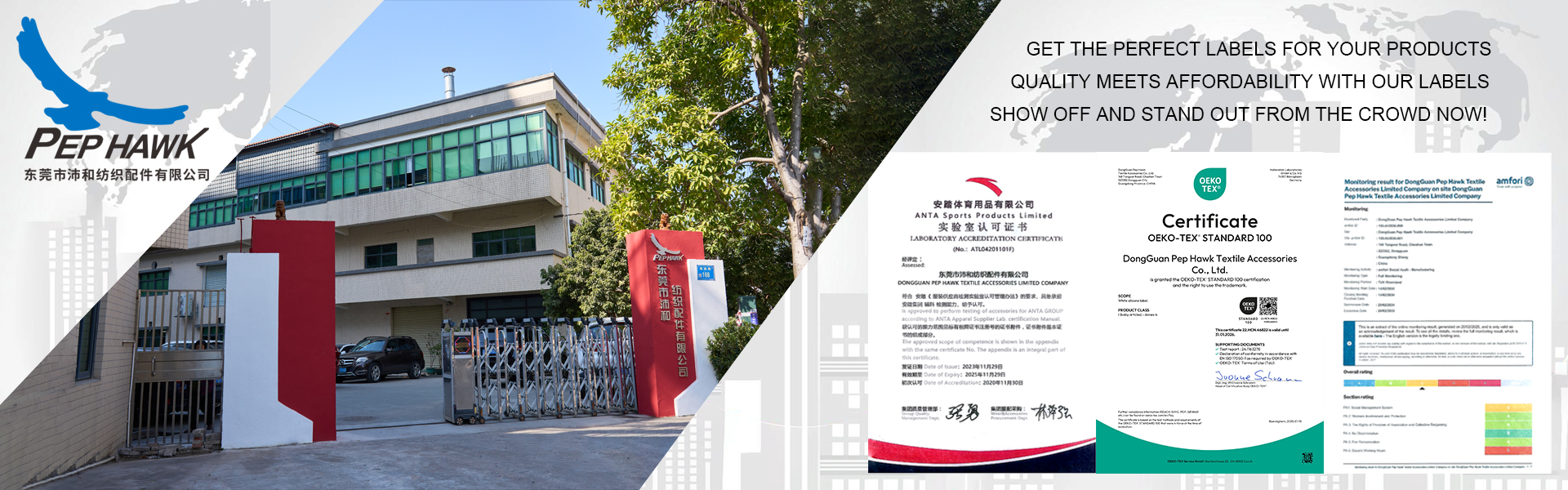
The Small Business Survival Kit: 5 Logo Types That Generate 27% More Local Revenue
Design Your Own Logo: 4 Strategic Precautions and 5 Future-Proof Design Approaches



