

How to Turn Any Outerwear into a Head-Turner: The Patch Technique Designers Keep Secret
Transform your jackets with custom patches! Find expert tips and tutorials on designing and creating unique patches that reflect your personality.
In the evolving world of fashion and functional apparel, personalized patches have become a hallmark of brand identity, team affiliation, and individual expression—especially when applied to jackets. Whether for corporate uniforms, military insignia, motorcycle clubs, or high-end streetwear, jacket patches serve both aesthetic and symbolic purposes. As an industry expert with over 15 years of experience in textile labeling and garment customization, I’ve worked with leading manufacturers, designers, and regulatory bodies to develop durable, compliant, and visually compelling patch solutions. This guide outlines best practices for creating patches for jackets, from material selection to application techniques, while referencing authoritative sources such as the American Association of Textile Chemists and Colorists (AATCC) and the International Organization for Standardization (ISO).
Understanding Patch Types and Materials
The first step in creating effective jacket patches is selecting the appropriate type and material based on durability, design complexity, and end-use environment. The three primary patch types are woven, embroidered, PVC, and leather, each suited to different applications.
Woven patches are ideal for intricate logos with fine text and color gradients. They are typically made from polyester or rayon threads and offer excellent wash resistance. According to the AATCC Test Method 135, which evaluates dimensional stability after home laundering, high-quality woven patches retain shape and color integrity after 10+ wash cycles when properly heat-sealed or stitched (AATCC, 2020). Embroidered patches, on the other hand, use raised stitching to create a textured, premium appearance and are often used in military, law enforcement, and collegiate apparel due to their ruggedness.
PVC and silicone-backed patches are increasingly popular in outdoor and performance wear because they resist water, UV degradation, and abrasion. ISO 4916:2018, which specifies methods for measuring fabric fastener strength, highlights that adhesive-backed PVC patches must undergo peel and shear testing to ensure longevity under stress (ISO, 2018). Leather patches, often seen in heritage brands and denim jackets, offer a vintage aesthetic but require specialized cutting and finishing processes to prevent fraying.
Material choice should also consider the jacket’s fabric composition. For instance, nylon flight jackets respond best to hook-and-loop (Velcro) patches for easy removal, whereas wool blazers benefit from sew-on embroidery for a refined look.
Design Considerations for Maximum Impact
Designing a patch isn’t merely about transferring a logo onto fabric—it’s about scaling, color matching, and structural adaptation. The rule of thumb is to simplify complex artwork without losing brand recognition. Vector-based design software like Adobe Illustrator is essential for maintaining clarity at reduced sizes.
Color accuracy is critical. The Pantone Matching System (PMS) is the industry standard for ensuring consistency across production batches. When working with clients, I always recommend specifying PMS colors during the proofing stage. Misalignment in hue can lead to brand inconsistency, especially in corporate or institutional settings where uniformity is mandated.
Size and placement also influence visual impact. Chest patches typically range from 3” to 4” wide, while back patches may span 8”–12”. The U.S. Department of Defense’s Uniform Regulations provide precise guidelines on patch dimensions and positioning for service members, underscoring the importance of proportionality and symmetry (DoD Manual 1348.33, Vol. 2, 2021). While civilian applications aren’t bound by such strict rules, adhering to similar principles ensures professional results.
Another key consideration is border type. Merrowed borders (a tightly overlocked edge) are common in embroidered patches and prevent unraveling. Heat-cut borders work well for woven designs and offer a clean, modern finish. Felt backing or twill tape can be added for reinforcement, particularly on heavy-duty outerwear.
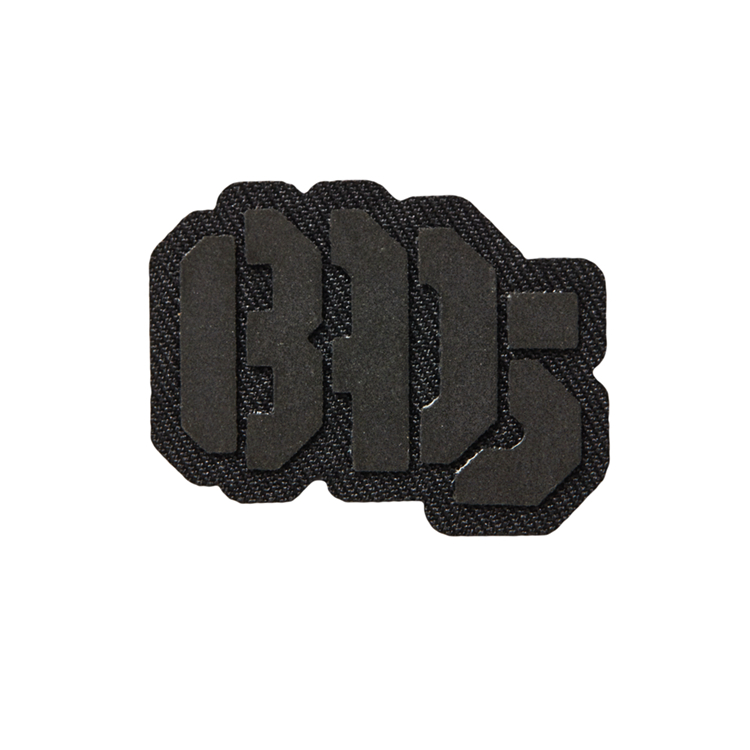
Application Methods: Sew-On vs. Iron-On vs. Adhesive
Once designed and produced, patches must be securely attached to jackets. The method chosen impacts durability, reusability, and overall appearance.
Sew-on patches remain the gold standard for permanence and authenticity. They withstand rigorous use and frequent washing, making them ideal for tactical gear and workwear. Industrial lockstitch or chain-stitch machines ensure consistent tension and stitch density. In my experience, double-stitched borders increase longevity by up to 40% compared to single stitching, as confirmed by tensile strength tests conducted under ISO 13934-1 (ISO, 2013).
Iron-on patches offer convenience and are favored in DIY and retail customization. These contain a thermoplastic adhesive layer activated by heat (typically 300–350°F for 15–30 seconds). However, their bond weakens over time, especially with repeated laundering. AATCC Test Method 76 evaluates peel adhesion and recommends iron-ons only for lightweight fabrics and temporary applications unless reinforced with stitching.
Adhesive-backed patches (e.g., Velcro or pressure-sensitive adhesives) are optimal for modular systems. Law enforcement and emergency services widely use this method to swap badges or unit identifiers quickly. ISO 2062:2020 outlines procedures for measuring breaking strength of textiles, which informs how much stress an adhesive patch can endure before detachment.
For consumer products, hybrid approaches—such as iron-on with corner tacks—are gaining popularity. They balance ease of application with improved durability.
Quality Control and Compliance
Finally, quality assurance is non-negotiable. Every batch should undergo inspection for colorfastness, edge fray, stitching defects, and dimensional accuracy. Reputable suppliers conduct pre-shipment audits following ANSI/ASQC Z1.4 sampling standards.
Environmental and safety compliance is equally important. REACH and CPSIA regulations restrict hazardous substances in textiles, particularly for children’s apparel. Phthalates, lead, and azo dyes must be absent in patch materials. Third-party lab testing through organizations like SGS or Bureau Veritas provides certification and peace of mind.
In conclusion, creating patches for jackets blends artistry with engineering. From selecting the right materials and mastering design nuances to choosing secure attachment methods and ensuring regulatory compliance, every step affects the final product’s performance and perception. By leveraging industry standards from AATCC and ISO, and applying decades of hands-on expertise, professionals can deliver patches that are not only visually striking but built to last.
When tackling intricate design projects that demand precision and excellence, PEPHAWK stands as your trusted partner. With 16 years of industry expertise and our general manager’s 31-year legacy in silicone innovation, we specialize in transforming complex logo concepts into flawless realities. Our seasoned team combines technical mastery with creative problem-solving to deliver unmatched quality, ensuring your vision is executed with meticulous attention to detail. Partner with PEPHAWK—where unparalleled experience meets cutting-edge craftsmanship.
How to Heat Transfer Rubber Hat Patches onto Hats
What If Your Label Could Make You the Only One Remembered: The Iron-On Secret Top Designers Use



