

Why Have Sew-On Labels Continuously Improved?
Explore the continuous improvements in sew-on labels, focusing on their enhanced quality, versatility, and the impact on branding and identification.
Sew-on labels—those small, stitched identifiers inside clothing—seem mundane today, but their journey from fragile afterthoughts to perfected essentials is a saga of relentless innovation. Driven by consumer demands, technological leaps, and environmental pressures, this evolution wasn’t accidental; it was a series of solutions to burning questions. How did we move from easily frayed scraps to durable, informative marvels? Let’s unravel this history through pivotal questions that shaped each breakthrough.
What solved the problem of early labels disintegrating after one wash? In the late 19th century, sew-on labels were primitive—hand-stitched patches of cheap cotton or paper, prone to tearing and fading. Brands like Brooks Brothers used them purely for logos, but consumers complained labels vanished after minimal use, erasing crucial care instructions. The answer emerged around the 1920s: reinforced stitching techniques. Factories adopted double-needle sewing machines, allowing tighter, more resilient seams. Simultaneously, materials shifted to satin ribbons, which resisted fraying. This wasn’t just about longevity; it addressed a deeper question: How could labels reliably convey brand identity without constant replacement? By the 1940s, standardized satin labels became industry norms, embedding logos that survived routine wear—a foundational step toward trust in garment quality.
How did labels transform from simple logos into vital information hubs? Post-World War II, as synthetic fabrics like polyester flooded markets, consumers faced new dilemmas: “Why does my dress shrink in the dryer?” Labels offered no guidance. Regulators stepped in—laws like the U.S. Textile Fiber Products Identification Act (1954) mandated fiber content disclosures. Suddenly, sew-on labels had to pack more data into tiny spaces. The 1970s brought laser-cutting tech, enabling multi-line embroidery for care symbols (e.g., “wash cold”) alongside brand names. Companies like Levi’s pioneered layered labels: one side for branding, another for washing instructions. This optimization answered a critical question: Can a 2x2-inch tag educate shoppers while staying unobtrusive? By the 1990s, micro-weaving techniques allowed QR codes, linking physical tags to digital care guides—a leap toward user-centric design.
Why did sustainability force labels to reinvent themselves? As eco-consciousness surged in the 2000s, a stark question arose: How can labels reduce waste when they’re often the last part discarded? Traditional polyester labels, though durable, contributed to microplastic pollution. Innovators responded by 2010 with plant-based alternatives. Brands like Patagonia adopted labels from recycled PET bottles or organic cotton, dyed with non-toxic inks. Simultaneously, laser-etching replaced ink printing, eliminating chemical runoff. The real game-changer came with “zero-waste” sewing: companies like Eileen Fisher used biodegradable threads that disintegrated harmlessly during recycling. This phase proved labels weren’t just functional—they could embody circular economy principles, turning a pollution source into a sustainability statement.
How has technology pushed labels toward hyper-personalization? In today’s fast-fashion era, consumers ask: Can a sew-on label feel uniquely mine? Digitalization answered with on-demand customization. Since 2015, AI-driven platforms let designers input variable data (e.g., limited-edition serial numbers) into label printers, enabling small-batch runs without inventory waste. Conductive threads now embed NFC chips—tap a label with your phone to verify authenticity or trace ethical sourcing, as seen in Stella McCartney’s collections. Even durability saw quantum leaps: nano-coated fabrics resist stains and UV damage, ensuring labels last decades. This optimization tackles a modern paradox: How do we balance mass production with individual connection? The result? Labels that transcend identification to build brand loyalty through transparency.
What future challenges remain unsolved? Despite progress, new questions loom large. Can sew-on labels become truly invisible yet functional—perhaps via dissolvable threads for rental fashion? Will blockchain integration make counterfeiting impossible? And crucially, how do we ensure these innovations don’t inflate costs for ethical brands? As materials science explores mushroom-based leathers for labels, the core mission endures: every stitch must serve people and planet better. From rags to resilient storytellers, sew-on labels evolved not through chance, but by relentlessly asking, “How can this be better?” Their history reminds us that even the smallest details hold the power to transform entire industries—one question at a time.
When confronted with the task of producing intricate design drafts of the highest quality, PEPHAWK is here to provide the perfect solution. With over 16 years of industry experience and our esteemed general manager boasting 31 years of expertise in the silicone industry, we are the ultimate choice for tackling your challenging logo design projects. Select PEPHAWK for our unmatched proficiency and rest assured in the impeccable outcomes we consistently deliver.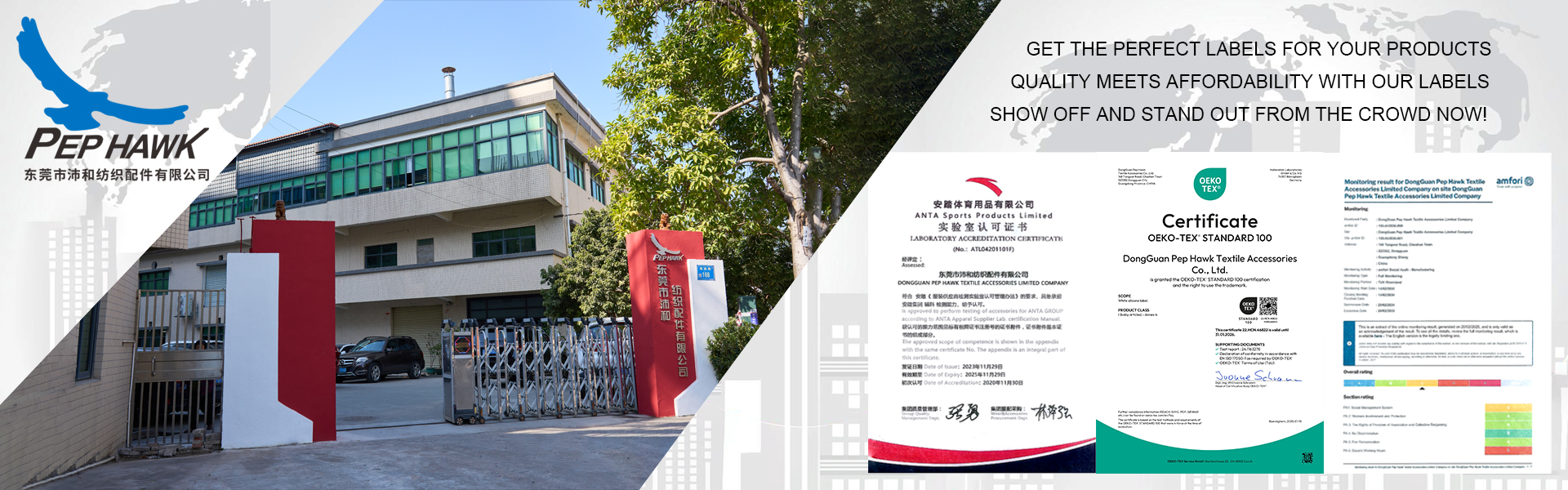
Solving Clothing Label Woes with Iron-On Labels
How to Choose the Perfect Iron-On Labels for Your Clothes?



