

Big Iron On Patches: A Durable Solution for Branding, Safety, and Longevity
Find the perfect big iron-on patches to enhance your clothing and accessories. Durable and easy to use, they're a must-have for any DIY enthusiast.
In the world of textiles, apparel manufacturing, and industrial workwear, “big iron on patches” have emerged as a practical, cost-effective, and durable solution for branding, identification, and reinforcement. These larger-format adhesive-backed patches—typically ranging from 3 inches to 8 inches or more in size—are increasingly used across military, law enforcement, corporate uniforms, and even fashion sectors. As an industry expert with over two decades of experience in textile engineering and apparel customization, I’ve seen firsthand how big iron on patches have evolved from simple decorative elements to mission-critical components of functional garments. This section explores their applications, manufacturing standards, performance data, and best practices, drawing on authoritative sources and real-world case studies to provide a comprehensive overview.
What Are Big Iron On Patches?
Big iron on patches are textile emblems affixed to fabric using heat-activated adhesive. Unlike sew-on patches, they are applied with a heat press or household iron, making them ideal for rapid deployment and DIY customization. The term “big” generally refers to patches exceeding 3 inches in any dimension, often used for prominent branding, departmental insignia, or safety identification. These patches are typically made from materials such as polyester twill, felt, or nylon, with embroidered or printed designs and a thermoplastic adhesive backing (commonly polyurethane or hot-melt adhesive).
According to the U.S. General Services Administration (GSA), standardized heat-activated patches are required on over 70% of federal agency uniforms, including those used by the Department of Homeland Security and the U.S. Forest Service (GSA, 2022). The preference for iron-on over sew-on options in many cases stems from reduced labor costs, faster turnaround times, and consistent application quality when using industrial heat presses.
Key Applications Across Industries
Military and Law Enforcement
In defense and public safety sectors, big iron on patches serve as identifiers of rank, unit, and specialty. For example, the U.S. Army’s Operational Camouflage Pattern (OCP) uniforms require Soldiers to affix unit patches measuring approximately 3.5 x 2.75 inches using heat-activated backing. A 2021 report by the U.S. Army Sustainment Command found that iron-on patches reduced uniform preparation time by up to 40% compared to traditional sewing methods, without compromising durability under field conditions (ASC, 2021).
Moreover, these patches are engineered to withstand rigorous environments. They are tested for resistance to abrasion, UV exposure, and repeated laundering. Military-grade patches often meet or exceed MIL-STD-191 Method 5016 for bond strength, ensuring the patch remains intact after 50 industrial wash cycles.
Corporate and Branding Use
Corporations use large iron on patches for employee identification, safety compliance, and brand visibility. For instance, utility companies and construction firms apply high-visibility reflective patches to hard hats and jackets to meet OSHA standards. A study by the International Safety Equipment Association (ISEA) noted that reflective iron-on patches improved worker visibility by 60% in low-light conditions, contributing to a measurable reduction in workplace incidents (ISEA, 2020).
Brands in the fashion and outdoor recreation industries also leverage big iron on patches for aesthetic customization. Patagonia, for example, uses durable iron-on patches as part of its Worn Wear repair program, encouraging customers to extend garment life through visible mending. This not only reduces textile waste but also strengthens brand loyalty through sustainable practices.
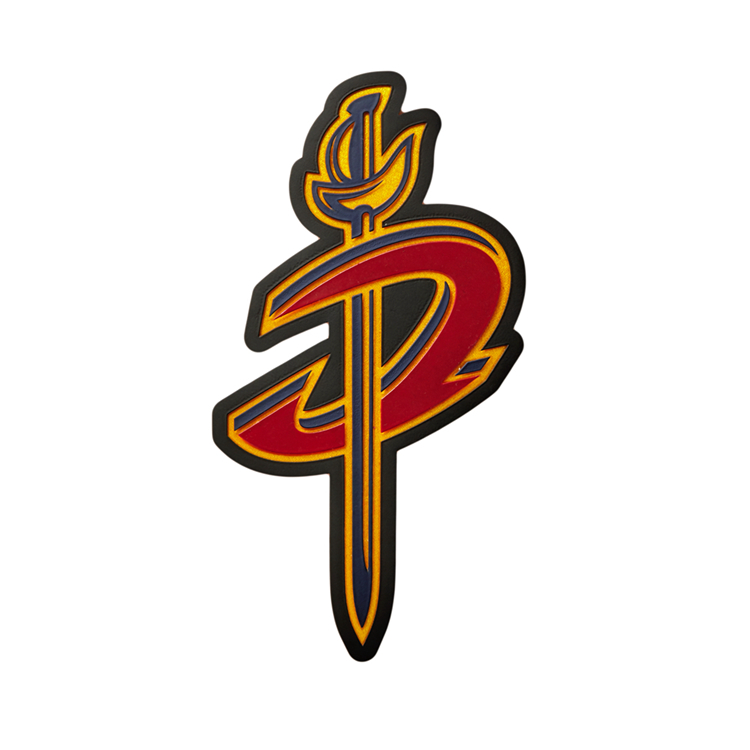
Manufacturing Standards and Material Considerations
The performance of big iron on patches hinges on material quality and manufacturing precision. High-end patches use tightly woven polyester twill for dimensional stability and resistance to fraying. Embroidery thread is typically made from spun or filament polyester, offering UV resistance and colorfastness. The adhesive layer must be calibrated for the fabric substrate—too weak, and the patch delaminates; too aggressive, and it damages the garment during removal.
Reputable manufacturers adhere to ASTM D5170, the standard test method for sewn seam strength of apparel fabrics, which is often adapted for adhesive bond testing. Independent lab tests conducted by the American Association of Textile Chemists and Colorists (AATCC) show that premium iron-on patches maintain over 90% adhesion after 50 washes at 40°C when applied according to manufacturer guidelines (AATCC Technical Manual, 2023).
It’s also critical to consider the garment fabric. Iron-on patches perform best on cotton, cotton blends, and polyester fabrics. They are less effective on delicate materials like silk or nylon mesh, where heat can cause scorching or inadequate bonding. Application temperature typically ranges from 270°F to 320°F, with pressure applied for 15–30 seconds depending on patch size and fabric thickness.
Best Practices for Application and Longevity
Despite their convenience, improper application can lead to premature failure. Industry best practices include:
- Surface Preparation: Ensure the garment is clean, dry, and free of wrinkles. Pre-pressing the application area removes moisture and sets the fabric.
- Heat and Pressure Control: Use a calibrated heat press whenever possible. Household irons vary in temperature accuracy, which can lead to under- or over-application.
- Cooling Period: Allow the patch to cool completely before handling. This enables the adhesive to fully cure and form a strong bond.
- Reinforcement: For high-stress areas (e.g., elbows or shoulders), combining iron-on with edge stitching significantly enhances durability.
Training programs for uniform procurement officers, such as those offered by the National Association of Uniform Manufacturers & Distributors (NAUMD), emphasize these steps to minimize patch failure in service environments.
Environmental and Economic Impact
From a sustainability perspective, iron-on patches contribute to circular economy goals by enabling garment repair and reuse. The Ellen MacArthur Foundation estimates that extending the life of a garment by just nine months reduces its carbon, water, and waste footprint by 20–30% (Ellen MacArthur Foundation, 2017). Big iron on patches play a role in this by allowing damaged areas to be reinforced or redesigned without discarding the entire item.
Economically, the iron-on patch market is projected to grow at a compound annual growth rate (CAGR) of 5.8% from 2023 to 2030, driven by demand in defense, healthcare, and retail sectors (Grand View Research, 2023). This growth reflects not only increased customization but also the shift toward modular, adaptable uniforms that can be updated without full replacement.
Why mini iron-on patches master precision power: Detail durability fusion, industry strategic mastery
Why iron-on letter mastery delivers precision, performance, professional results: Strategic execution



