

What Makes a Custom Golf Patch the Most Underrated Branding Asset in the Sport?
Table of Contents
- The Main Categories of Golf Patches You Should Know
- Golf Patch Type Comparison at a Glance
- The Complete Step-by-Step Process of Manufacturing a Custom Golf Patch
- Backing Type Comparison for Golf Patches
- Where Do Golf Patches Deliver the Greatest Branding ROI?
- Material Durability Comparison Across Golf Environments
A golf patch is a small, decorative emblem—typically sewn, ironed, or adhered onto hats, bags, polos, towels, and headcovers
The Main Categories of Golf Patches You Should Know
Not all golf patches are created equal. The manufacturing technique, base material, and finishing method determine the patch's visual appeal, durability, texture, and price point. Below are the most popular categories that buyers in the golf industry order in bulk.
Embroidered Golf Patches
Embroidered patches remain the gold standard for golf branding. Threads are stitched directly onto a twill or felt backing to create raised, textured designs that catch the light on the fairway. They offer a classic, premium look that aligns perfectly with golf's heritage aesthetic. Most country club logos and tournament emblems you see on caddie bibs and member hats are embroidered golf patches.
Woven Golf Patches
Woven patches use thinner threads woven tightly together on a loom, producing a flat, highly detailed surface. Because the weave density is much higher than embroidery, woven golf patches can reproduce intricate artwork, small text, and gradient-like color transitions that embroidery simply cannot achieve. They are ideal for complex course logos or commemorative tournament designs with fine linework.
PVC (Rubber) Golf Patches
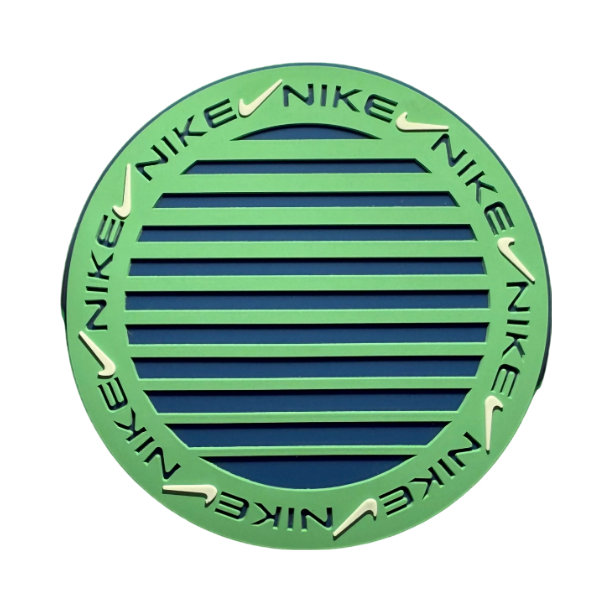
PVC golf patches are molded from soft polyvinyl chloride, giving them a three-dimensional, rubbery texture that is virtually indestructible. They resist water, mud, and UV exposure—making them perfect for golf bags, travel covers, and outdoor gear that endures harsh weather. The 3D layering effect allows designers to create depth and dimension that flat fabric patches cannot replicate.
Leather and Suede Golf Patches
For luxury golf brands and high-end private clubs, leather or faux-suede patches project exclusivity. These patches are typically laser-engraved or debossed with a logo and then stitched onto premium headcovers, leather scorecard holders, or designer polos. The natural grain of the material adds a tactile sophistication that synthetic alternatives struggle to match.
Chenille Golf Patches
Chenille patches feature a fuzzy, carpet-like pile created by looping yarn through a backing fabric. While more commonly associated with varsity jackets, chenille golf patches have gained popularity for retro-inspired capsule collections and limited-edition tournament merchandise. Their bold, textured appearance stands out on canvas golf bags and bucket hats.
Sublimated (Printed) Golf Patches
Sublimated patches use heat-transfer dye technology to print full-color photographic images onto a polyester base. If your golf patch design involves a scenic landscape of your course, a photorealistic mascot, or a multi-color gradient, sublimation delivers results that thread-based methods cannot. The trade-off is a flatter texture and slightly less durability under heavy abrasion.
Golf Patch Type Comparison at a Glance
| Feature | Embroidered | Woven | PVC | Leather | Chenille | Sublimated |
|---|---|---|---|---|---|---|
| Detail Level | Medium | Very High | High | Medium | Low | Very High |
| Texture | Raised | Flat | 3D Molded | Natural Grain | Fuzzy Pile | Smooth |
| Durability | High | High | Very High | High | Medium | Medium |
| Water Resistance | Moderate | Moderate | Excellent | Low | Low | Moderate |
| Best For | Club Logos | Fine Artwork | Golf Bags | Luxury Gear | Retro Caps | Photo Prints |
| Min. Order Qty | 50–100 | 100 | 100 | 50 | 50 | 50 |
| Cost Range | $$ | $$ | $ | $ | $$ | $ |
The Complete Step-by-Step Process of Manufacturing a Custom Golf Patch
Understanding the production workflow helps you communicate more effectively with your patch supplier, set realistic timelines, and avoid costly design errors. Below is the full journey from concept to finished product.
Step 1: Artwork Submission and Design Consultation
The process begins when you submit your golf course logo, tournament emblem, or original artwork to the manufacturer. Vector files (AI, EPS, or PDF) are strongly preferred because they allow the design team to scale and separate colors without losing clarity. During this phase, a professional designer will review your artwork and recommend the most suitable patch type based on detail complexity, color count, and intended application. For example, a logo with eight colors and tiny serif text would be better suited to a woven golf patch than an embroidered one.
Step 2: Digital Proofing and Approval
Once the design team digitizes your artwork—converting it into stitch files for embroidery or weave patterns for loom production—they generate a digital proof for your review. This proof shows the exact color placement, dimensions, border style, and backing type. Carefully inspect every element at this stage, because any changes after production begins will incur additional fees and delays. Most reputable manufacturers offer two to three rounds of revisions at no extra charge.
Step 3: Thread and Material Selection
After you approve the proof, the production team sources the specific thread colors (often matched to Pantone codes), backing fabrics, and border materials. For embroidered golf patches, rayon or polyester threads are the most common choices—rayon offers a silkier sheen, while polyester provides superior colorfastness under sunlight. For woven patches, 100% polyester damask yarn is the industry standard. PVC patches require a separate mold-making process using liquid PVC resin poured into CNC-machined metal molds.
Step 4: Sample Production (Optional but Recommended)
For large orders exceeding 500 pieces, requesting a physical pre-production sample is highly advisable. The manufacturer will produce one to three sample golf patches using the actual materials and machines intended for the full run. This allows you to evaluate color accuracy, stitch density, edge finishing, and overall hand-feel before committing to mass production. Sample lead times typically range from five to ten business days.
Step 5: Mass Production
Once the sample is approved (or skipped for smaller orders), the full production run begins. Embroidered golf patches are produced on multi-head embroidery machines that can stitch dozens of patches simultaneously. Woven patches are created on Jacquard looms. PVC patches undergo a molding and curing process. Production timelines vary by order size and complexity but generally fall between seven and fifteen business days for orders under 5,000 units.
Step 6: Cutting, Trimming, and Quality Inspection
After the patches come off the machines, each piece is individually cut—either by laser for precision or by die-cut for uniform shapes. Loose threads are trimmed, and every golf patch undergoes a visual quality inspection to check for color bleeding, misaligned stitching, or material defects. Reputable manufacturers maintain a defect rate below two percent and will replace any substandard units at no cost.
Step 7: Backing Application and Packaging
The final step involves applying the chosen backing type. The most common options include:
- Iron-on (heat-seal) backing: A thermoplastic adhesive layer that bonds to fabric when pressed with a household iron or heat press.
- Sew-on backing: No adhesive; the patch is stitched directly onto the garment for maximum permanence.
- Velcro (hook-and-loop) backing: Allows the golf patch to be swapped between hats, bags, and jackets—popular for tournament series where players collect a new patch each round.
- Adhesive peel-and-stick backing: A temporary solution for event giveaways and promotional activations.
Patches are then individually poly-bagged or mounted on branded backing cards before shipping.
Backing Type Comparison for Golf Patches
| Backing Type | Application Method | Permanence | Washability | Best Use Case |
|---|---|---|---|---|
| Iron-On | Heat Press / Iron | High | Machine Washable | Polos, Hats, Towels |
| Sew-On | Needle & Thread | Very High | Machine Washable | Premium Apparel, Bags |
| Velcro | Hook-and-Loop | Removable | Detach Before Wash | Collector Series, Events |
| Peel-and-Stick | Pressure Adhesive | Low | Not Washable | Giveaways, Trade Shows |
Where Do Golf Patches Deliver the Greatest Branding ROI?
The versatility of a golf patch is what makes it such a powerful marketing tool. Here are the most impactful applications across the golf industry:
Tournament and Event Merchandise: Custom golf patches commemorating annual tournaments, charity scrambles, or member-guest weekends serve as wearable souvenirs that participants proudly display for years. Unlike disposable swag, a patch becomes part of a golfer's identity.
Course Pro Shops: Stocking branded golf patches at your pro shop creates an impulse-buy opportunity at the register. Patches priced between $5 and $12 carry high margins and reinforce course loyalty every time a member attaches one to their bag.
Corporate Gifting and Sponsorship Activation: Companies sponsoring golf outings can distribute custom golf patches featuring both the corporate logo and the event name. This dual-branding approach maximizes exposure while offering recipients a keepsake they will actually use.
Apparel and Headwear Customization: Blank golf hats, polos, and bags become instantly branded when a custom patch is applied. This approach is far more cost-effective than ordering fully custom-embroidered garments from scratch, especially for small-batch runs.
Collector and Limited-Edition Series: Some of the most successful golf brands have launched patch-of-the-month subscription programs or limited-run series tied to major championships. The scarcity model drives engagement and repeat purchases among passionate golf enthusiasts.
Material Durability Comparison Across Golf Environments
| Environment | Embroidered | Woven | PVC | Leather | Sublimated |
|---|---|---|---|---|---|
| Direct Sunlight (UV) | Good | Excellent | Excellent | Poor | Fair |
| Rain and Humidity | Fair | Fair | Excellent | Poor | Good |
| Friction (Bag Rub) | Good | Good | Excellent | Good | Fair |
| Repeated Washing | Good | Excellent | N/A | Poor | Fair |
| Temperature Extremes | Good | Good | Excellent | Fair |
Navy Blue Patches: Trends and Innovations in Fashion
Why Under Armour Hats May Not Be the Best Choice for Your Brand



